Buying land sounds simple. No inspection contingencies for appliances. No seller staging a living room to distract you from the foundation. Just open ground and the future you're imagining for it.
Here's what most buyers find out too late: land purchases are more complex than home purchases, not less. The due diligence is deeper, the financing is harder, and the ways things can go sideways are less obvious. A house comes with walls and a roof that tell you what it is. A piece of land is a blank canvas — and blank canvases have hidden problems that don't show up in listing photos.
This guide covers how to buy land in Oklahoma in 2026 — the right way, from the first search through closing — so your vision for that piece of ground has a real foundation to stand on.
Why Oklahoma Land Is Worth Serious Attention in 2026
Oklahoma has approximately 44 million acres of land — most of it privately held, and a meaningful portion available to buyers at prices that would be implausible in states with similar geography and climate. Demand from buyers relocating from higher-cost states has increased, but Oklahoma land prices remain well below what comparable acreage commands in Texas, Colorado, or the Carolinas.
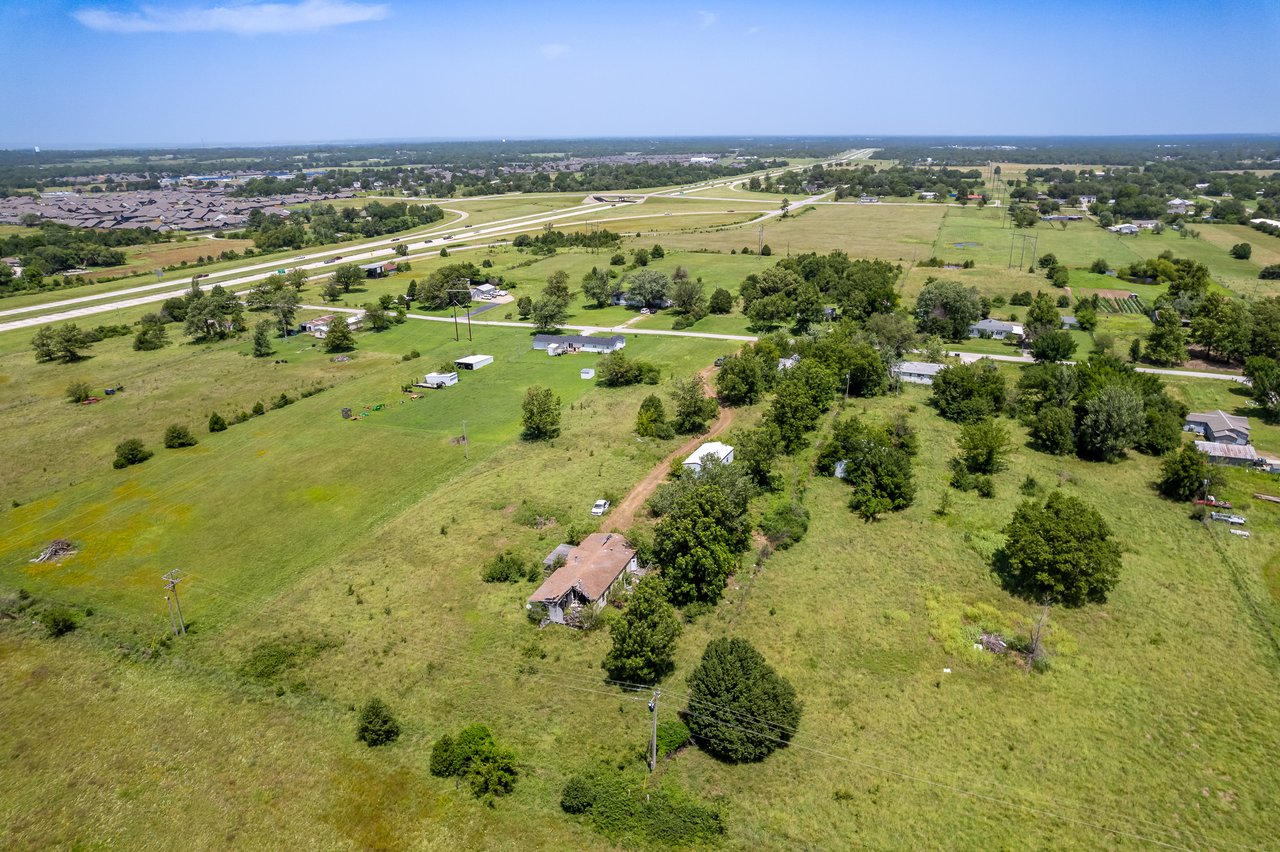
The market spans a wide range of use cases: rural homesteads, agricultural operations, investment land held for appreciation, hunting and recreational tracts, timber land in eastern Oklahoma, and raw land for future residential or commercial development. Each category has its own pricing logic, due diligence requirements, and financing landscape.
Understanding which type of land you're buying — and why — shapes every decision that follows.
Step 1: Define What You're Actually Buying Land For
This sounds obvious. It isn't. Many buyers have a general sense that they "want land" without having worked out the specifics — and the specifics determine everything about which parcel is right and what due diligence matters most.
Common Land Purchase Purposes in Oklahoma
Rural homestead / building a home: You intend to build a primary or secondary residence. Key concerns: zoning and permitted uses, soil suitability for a septic system, access to utilities or feasibility of alternatives (well, solar, propane), road access and legal easements.
Agricultural use — farming: Crop farming requires specific soil quality, water access or irrigation rights, and workable acreage. In Oklahoma, wheat, cotton, sorghum, and hay are common crops. Flood-prone land can be unusable for farming; creek bottoms can be the richest soil on the parcel.
Agricultural use — livestock: Pastureland and grazing leases have a different profile. Quality is measured by carrying capacity (how many animal units per acre the land can support), water source availability, and fencing condition.
Hunting and recreational: Oklahoma's eastern half in particular — with its timber, creek bottoms, and diverse habitat — attracts buyers seeking deer, turkey, and waterfowl hunting. Recreational land value is driven by habitat quality, water features, and road access. Recreational tracts don't need electricity or septic but do need legal access.
Investment / buy and hold: Purchasing raw land with no immediate development plans, held for future appreciation. Oklahoma land in certain growth corridors — particularly around the Tulsa and OKC metros — has appreciated meaningfully over the past decade. Investment land buyers are focused on location trajectory, growth patterns, and holding costs.
Development: Purchasing land to subdivide, develop, or flip to a developer. This requires deep familiarity with zoning, utility infrastructure, platting requirements, and market demand. Development land due diligence is its own discipline.
Your purpose determines your priorities. Get clear on it before you start searching.
Step 2: Understand Oklahoma's Land Geography
Oklahoma's landscape is genuinely varied — and that variation affects land value, use, and due diligence in ways that matter.
Western Oklahoma
Flat, agricultural, with large-scale farming and rangeland. Lower price per acre than eastern Oklahoma. Excellent for agricultural buyers. Minimal tree cover; less attractive for recreational buyers. Wind energy leases are common on western Oklahoma land — a potential revenue stream or an encumbrance depending on how you're using the land.
Central Oklahoma
The OKC metro corridor. The fastest-appreciating land market in the state due to development pressure. Raw land near Edmond, Yukon, Mustang, and the metro edge commands premium prices driven by residential and commercial development potential. Zoning and future land use plans are critical research here.
Northeastern Oklahoma (Green Country)
The most topographically diverse part of the state — the Ozark foothills, Cherokee Hills, and river corridors. Heavy timber, abundant water, excellent recreational land. This is Oklahoma's premium hunting and homestead land market. Grand Lake, Lake Tenkiller, and the Illinois River corridor attract both recreational and residential buyers. Land prices are higher per acre than most of Oklahoma but still significantly below comparable Ozark-region land in Arkansas or Missouri.
Eastern Oklahoma / Ouachita Region
Timber country with rolling terrain, abundant creeks, and some of the most scenic land in the state. Strong hunting demand. Winding roads and remoteness are features for some buyers and drawbacks for others.
Southeastern Oklahoma
The least populated region of the state. Very affordable land with significant timber resources and recreational value. Farther from metro services and healthcare — a tradeoff buyers need to weigh honestly.
Step 3: Know the Key Due Diligence Items for Oklahoma Land
This is where land purchases get more demanding than home purchases — and where buyers who skip steps pay for it later.
Legal Access and Easements
This is the most critical issue on any land purchase. Before anything else, confirm that the parcel has legal access to a public road. "Landlocked" parcels — those that can only be reached by crossing a neighbor's property without a formal, recorded easement — do exist in Oklahoma and can be nearly impossible to remedy after purchase.
Review the deed and title carefully for:
- Legal access easements — recorded right-of-way across adjacent land granting access to a public road
- Utility easements — power lines, pipelines, and other utilities may cross the property; easements limit your use in those corridors
- Mineral rights reservations — often separated from surface rights in Oklahoma; a prior owner may have retained mineral rights, meaning energy companies can access the surface to extract subsurface resources
A title company or real estate attorney should review the chain of title before closing. On land transactions, do not skip this step.
Mineral Rights
Oklahoma has a long history of oil and gas production. Mineral rights are frequently severed from surface rights — meaning the person who owns the land may not own the oil, gas, or other minerals beneath it.
Understand what mineral rights, if any, convey with the purchase. Even if you're not planning to drill anything, severed mineral rights mean that a mineral rights owner (or their lessee) may have the legal right to access the surface to conduct operations — which affects your use of the land.
If mineral rights are available, negotiate for them. If they've been severed, understand what existing oil and gas leases are in place and what rights they grant.
Survey
A current survey shows you exactly what you're buying — boundary lines, acreage, improvements, easements, and encroachments. In Oklahoma, many rural parcels have not been surveyed in decades, and fence lines may not match legal boundaries.
Order a survey. The cost — typically $1,000 to $5,000+ depending on acreage and terrain — is trivial relative to the value of knowing exactly what you're purchasing.
Soil and Percolation Testing
If you intend to build on the land, you need to know two things: whether the soil can support a structure's foundation, and whether it will support a conventional septic system.
A perc test (percolation test) evaluates whether the soil drains adequately to support a conventional septic system. Clay-heavy soils in many parts of Oklahoma can fail perc tests, requiring more expensive alternative septic systems or making the parcel unsuitable for residential development.
The Oklahoma Department of Environmental Quality (ODEQ) regulates onsite sewage systems in Oklahoma. Know the requirements for your county before you commit.
Flood Plain Status
Oklahoma has extensive creek and river systems, and floodplains are common — particularly in eastern Oklahoma. Check the parcel against FEMA flood maps (available at msc.fema.gov) to understand what percentage, if any, falls within the 100-year floodplain.
Land in the floodplain isn't automatically unusable — but flood insurance requirements, building restrictions, and the actual risk of inundation are all factors that affect value and use.
Water Access
Surface water rights: Oklahoma follows the prior appropriation doctrine for water rights — meaning the right to use water from a stream or lake is determined by priority date ("first in time, first in right"). Existing water rights on a parcel may convey with the land; confirm what's there.
Groundwater and wells: If the parcel has an existing well, have it inspected and water tested. If you plan to drill a well, research the local water table depth and typical well costs in that area. In parts of western Oklahoma, water table depths make well drilling expensive.
Rural water districts: Many rural areas of Oklahoma are served by Rural Water Districts that can extend service to your property. Contact the local rural water district to confirm service availability and connection costs before assuming you can access public water.
Zoning and Permitted Uses
Oklahoma is not entirely a zoning state — many rural counties have limited or no zoning outside of incorporated areas. However, some counties do regulate land use, and properties near incorporated municipalities may be subject to city or county regulations.
Confirm with the county assessor or planning office:
- Whether the parcel is zoned and what uses are permitted
- Whether your intended use is allowed
- Whether there are any deed restrictions from prior owners
- What the minimum lot size requirements are if you intend to subdivide
Existing Agricultural Leases
Many Oklahoma rural parcels — particularly farmland and pastureland — have existing agricultural leases in place. A tenant farmer may have a legal right to farm the land through the end of a lease term even after you purchase the property.
Know what leases exist before closing. If you want vacant possession, confirm when the lease expires and whether the seller can deliver the property free of tenants at closing.
Step 4: Understand Land Financing in Oklahoma
Land loans are structurally different from home mortgages — and the options are more limited.
Why Land Financing Is Harder
Lenders view raw land as higher-risk collateral than improved real estate. There's no building to sell if the borrower defaults — just ground, which is harder to value and harder to sell quickly. As a result:
- Down payments are higher — typically 20–50% of the purchase price, depending on the land type and lender
- Interest rates are higher — land loan rates run 1–3% higher than conventional mortgage rates
- Terms are shorter — land loans often have 10–20 year terms rather than 30 years
Land Loan Options in Oklahoma
Farm Credit of Oklahoma / AgFirst Farm Credit: The Farm Credit system is specifically designed to finance agricultural land. Farm Credit lenders often offer the most favorable terms on agricultural and rural land purchases — longer terms, competitive rates, and deep familiarity with rural Oklahoma properties. If you're buying agricultural or rural land, contact Farm Credit early.
Oklahoma Agriculture Finance Authority: OAFA provides loan programs to support Oklahoma agricultural producers and rural land buyers. Programs vary; check current availability with your lender.
Local community banks and agricultural banks: Many Oklahoma community banks have agricultural lending departments with direct experience financing rural land in their specific markets. Local lenders often have better flexibility and market knowledge than national banks for rural land transactions.
USDA Farm Service Agency (FSA): The FSA offers direct and guaranteed loan programs for beginning farmers, socially disadvantaged farmers, and certain rural land purchases. Income and use requirements apply.
Seller financing: Common on rural land transactions, particularly for smaller parcels or buyers with unusual situations. Sellers carry the note themselves rather than requiring the buyer to obtain outside financing. Terms are negotiable — and seller-financed transactions often close faster and with less friction than bank-financed ones.
Cash purchases: Land purchases are more frequently cash transactions than home purchases — particularly for investors and buyers with equity from sold properties. Cash eliminates financing contingencies and significantly strengthens your negotiating position.
Step 5: Work With the Right Real Estate Professional
Not every real estate agent has meaningful experience with land transactions. The due diligence, negotiation considerations, and transaction mechanics of a land purchase differ enough from residential sales that experience matters.
Look for an agent or broker who:
- Has specific experience with land and rural property transactions in Oklahoma
- Understands mineral rights, easement review, and agricultural lease structures
- Has relationships with Farm Credit lenders, agricultural attorneys, and land surveyors
- Is familiar with the specific region where you're looking — land markets are highly local
The Oklahoma Association of Realtors and the Realtors Land Institute (RLI) can connect you with agents who specialize in land transactions. The Accredited Land Consultant (ALC) designation indicates advanced land transaction training.
Step 6: The Oklahoma Land Purchase Process
Once you've found the right parcel and done your preliminary due diligence research, the transaction follows these general steps:
Make an offer — Typically written on an Oklahoma Real Estate Commission (OREC) contract or a specialized land purchase agreement. Land contracts frequently include contingencies for survey, soil testing, financing, and title review.
Open escrow and order title — A title company will search the chain of title, identify any liens, easements, or encumbrances, and prepare title insurance for the buyer and lender.
Conduct due diligence — Survey, soil testing, perc test, well inspection, flood plain review, mineral rights review, lease review. This phase takes longer on land transactions than home transactions — budget 30–60 days.
Secure financing — Land loan underwriting moves more slowly than conventional mortgage underwriting in many cases. Start the financing process early.
Close — Oklahoma land closings are typically handled by a title company. The deed is recorded with the county clerk.
Frequently Asked Questions
Q: Do I need a real estate agent to buy land in Oklahoma?
You're not legally required to use an agent, but an experienced land agent provides genuine value — particularly in identifying due diligence issues, negotiating terms, and navigating the title and survey process. For rural or complex parcels, the cost of agent representation is typically far less than the cost of a mistake made without expert guidance.
Q: Can foreigners or out-of-state buyers purchase land in Oklahoma?
Yes, with some caveats. Oklahoma, like other states, has seen increased scrutiny of foreign purchases of agricultural land following federal and state-level legislation aimed at certain foreign government-affiliated buyers. Most international and out-of-state buyers face no restrictions, but consult a real estate attorney if questions arise.
Q: What are typical closing costs on a land purchase in Oklahoma?
Closing costs on Oklahoma land transactions typically run 2–5% of the purchase price and include title search and insurance, survey costs, recording fees, and lender origination costs if financed. Cash transactions have lower closing costs than financed ones.
Q: What taxes will I pay on Oklahoma land?
Oklahoma property taxes on rural land are generally low — among the lowest in the country for agricultural land. Agricultural land is often assessed at use-value (what the land is worth for agricultural production) rather than market value, which significantly reduces the tax burden for farmland buyers. Capital gains tax applies when you eventually sell land that has appreciated.
Q: How do I find land for sale in Oklahoma?
Multiple listing services (MLS) list some land but miss significant rural inventory. Land-specific platforms — LandWatch, Land and Farm, Lands of America, and AuctionTime for auction-based sales — cover rural Oklahoma inventory more thoroughly. Working with a local land specialist often surfaces off-market opportunities that never appear on public platforms.
Conclusion
Buying land in Oklahoma can be one of the most rewarding real estate decisions you make — the combination of affordability, geographic variety, and genuine opportunity is hard to match elsewhere in the country. But that opportunity is best captured by buyers who go in prepared: with clear purpose, thorough due diligence, the right financing, and the right professional guidance.
The land is out there. The question is making sure you end up with the right piece of it.
Thinking About Buying Land in Oklahoma? MORE Agency Knows the Territory.
Whether you're looking for a rural homestead, agricultural land, a hunting tract, or raw acreage for future development — the team at MORE Agency has the Oklahoma market knowledge and professional relationships to help you find and close the right property.
Contact MORE Agency today for a consultation, and let's talk about what you're looking for and where to find it.