Most real estate investors who discover Tulsa arrive the same way: they ran the numbers on a market they were already watching — Phoenix, Dallas, Nashville — and the math stopped working. Cap rates compressed. Purchase prices outpaced rents. Cash flow turned theoretical.
Then someone ran Tulsa. And the math started working again.
Tulsa isn't the flashiest market in the country. It won't generate the dinner party conversation that Miami or Austin does. But for investors who care about actual returns — monthly cash flow, sustainable cap rates, low vacancy in a stable rental market — Tulsa has consistently delivered what larger, louder markets have increasingly struggled to offer.
Here's an honest look at real estate investing in Tulsa in 2026 — what the numbers look like, what strategies work, what the risks are, and how to evaluate whether it makes sense for your portfolio.
Why Tulsa Works as an Investment Market
Before getting into specific strategies and numbers, it helps to understand the structural characteristics that make Tulsa a durable investment market — not just a temporarily cheap one.
Affordable Entry Points With Genuine Rental Demand
Tulsa's median home price sits well below the national average — which means investors can acquire rental properties at entry points that make cash flow viable. In markets where median home prices are $600,000–$800,000, the monthly rent required to generate positive cash flow on a leveraged purchase is often unrealistic. In Tulsa, where quality rental properties can be acquired in the $120,000–$280,000 range, the math closes more readily.
Rental demand is genuine and sustained. Tulsa has a large renter population — approximately 45% of households rent, above the national average — driven by a mix of young professionals, university students (University of Tulsa, Oral Roberts University, Tulsa Community College), healthcare workers, and service industry employees. Vacancy rates in well-maintained, well-located Tulsa rentals have historically been low.
Stable, Diversified Economy
A rental market is only as strong as the economy beneath it. Tulsa's economic base — energy, healthcare, aerospace, manufacturing, and a growing technology sector — is more diversified than its historical oil-town reputation suggests. Major employers include ONEOK, Williams Companies, American Airlines (large maintenance base), Saint Francis and Hillcrest health systems, BOK Financial, and NORDAM Group.
Economic diversification matters for investors because it reduces the single-sector risk that makes some markets volatile. Tulsa's 2015–2016 energy downturn demonstrated this resilience — the market softened but didn't collapse, and rental demand remained stable because healthcare, aerospace, and service employment continued.
Population and Workforce Trends
Tulsa has benefited from sustained in-migration — particularly from Tulsa Remote's targeted remote worker recruitment — that has added higher-income renters and eventual buyers to the market. Population growth in the broader metro has sustained housing demand across both the rental and ownership markets.
Investment Strategies That Work in Tulsa
Single-Family Rentals (SFR)
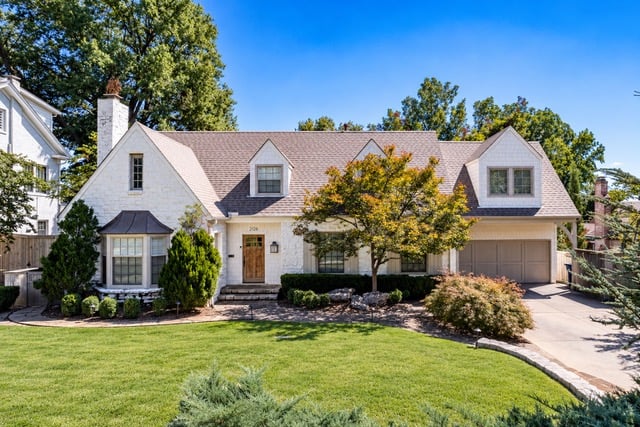
The most accessible entry point for most investors. Single-family homes in Tulsa's mid-range neighborhoods — East Tulsa, North Tulsa, parts of Midtown, and established suburban neighborhoods — offer the combination of achievable purchase prices and strong rental rates that generate positive cash flow.
What the numbers look like in 2026:
A representative single-family rental acquisition in Tulsa:
Item | Approximate Figure |
|---|---|
Purchase price | $155,000 |
Down payment (20%) | $31,000 |
Loan amount | $124,000 |
Interest rate (investment, 30-yr) | 7.25% (approximate) |
Monthly P&I | ~$847 |
Property taxes (monthly est.) | ~$110 |
Insurance (monthly est.) | ~$80 |
Property management (10%) | ~$130 |
Maintenance reserve (8%) | ~$104 |
Vacancy reserve (5%) | ~$65 |
Total monthly expenses | ~$1,336 |
Monthly rent | ~$1,300–$1,450 |
Monthly cash flow | ~$0–$114 |
At current interest rates, single-family rentals in Tulsa's mid-range are near breakeven to modestly cash-flow positive on a leveraged basis — not the slam-dunk returns that existed at 2020–2021 interest rates, but competitive with what most major metros offer at significantly higher acquisition costs. Investors who bring more equity to the table — larger down payments — improve cash flow meaningfully.
Where cash flow improves:
- Properties acquired below market through off-market deals, foreclosures, or motivated sellers
- Higher-rent relative to price — workforce housing in strong rental demand corridors
- Lower-rate financing through portfolio lenders or seller financing
- Cash purchases that eliminate the interest rate burden entirely
Small Multifamily (2–4 Units)
Duplexes, triplexes, and fourplexes are the sweet spot for many Tulsa investors — multiple income streams in a single acquisition, still eligible for residential financing on owner-occupied properties, and often available at per-unit prices that generate stronger cash flow than single-family alternatives.
Tulsa has a healthy stock of small multifamily properties across Midtown, North Tulsa, and East Tulsa — many built in the 1940s–1970s, well-suited to renovation and rent optimization.
Tulsa duplex example:
Item | Approximate Figure |
|---|---|
Purchase price | $220,000 |
Down payment (25%) | $55,000 |
Monthly rent (2 units × $850) | $1,700 |
Monthly PITI + expenses | ~$1,520 |
Monthly cash flow | ~$180 |
The math on small multifamily in Tulsa is generally more favorable than single-family — the combined rent relative to purchase price is stronger, and the vacancy risk is distributed across multiple units. One vacant unit in a duplex is 50% vacancy; one vacant single-family is 100%.
BRRRR Strategy in Tulsa
The BRRRR method — Buy, Rehab, Rent, Refinance, Repeat — works particularly well in Tulsa because the gap between distressed purchase prices and stabilized after-repair values (ARV) is meaningful enough to generate real equity creation.
Tulsa has consistent off-market and distressed inventory — properties needing renovation that can be acquired well below ARV, rehabbed to market condition, rented at current market rates, and then refinanced to pull equity out for the next acquisition.
What makes BRRRR work in Tulsa:
- Strong contractor availability and relatively competitive rehab costs compared to coastal markets
- Clear ARV benchmarks from strong comparable sales data
- Rental demand that fills rehabbed units quickly when priced correctly
- Portfolio lenders in Oklahoma who understand and work with BRRRR investors
The risks are the risks of any value-add strategy: cost overruns, timeline extensions, and ARV assumptions that don't hold. Investors new to BRRRR should start with straightforward cosmetic renovations before tackling structural projects.
Short-Term Rentals (STR) in Tulsa
Tulsa's short-term rental market — Airbnb, VRBO — is smaller than tourist destination markets but more viable than many people assume. Demand drivers include:
- Corporate travel and relocation stays (Tulsa has substantial corporate activity)
- Medical travel — patients and families at Tulsa's major medical campuses
- University events — OU/TU athletic events, graduations, family weekends
- Arts and entertainment events — BOK Center concerts, Gathering Place events, Tulsa Tough cycling
STR in Tulsa works best in Midtown, near the Gathering Place, and in unique or distinctive properties that offer something hotels don't. Vanilla suburban homes in areas with no particular draw perform poorly in the STR market.
Regulatory environment: Tulsa has STR regulations including registration requirements and zoning restrictions. Verify current STR rules with the City of Tulsa before purchasing a property specifically for short-term rental use — regulations can change and non-compliance carries penalties.
Commercial and Mixed-Use
More sophisticated investors in Tulsa's market are finding opportunity in small commercial — neighborhood retail strips, small office buildings, and mixed-use properties — where cap rates remain more attractive than what major metros offer and the underlying real estate is often undervalued relative to its income potential.
This segment requires deeper market knowledge, different financing, and more sophisticated property management — it's not a starting point for new investors. But for those with commercial experience, Tulsa's price-to-income ratios in small commercial are genuinely compelling.
The Tulsa Neighborhoods Investors Watch
North Tulsa
North Tulsa has long been Tulsa's most discussed and most misunderstood investment market. The area has faced disinvestment for decades — but sustained community development investment, proximity to downtown, and dramatically low per-square-foot acquisition prices have attracted serious investors who are willing to bet on long-term trajectory.
The risk is real: North Tulsa has higher crime rates than other parts of the city, variable property management quality, and a tenant pool that requires careful screening. The potential is also real: investors who know the market, manage properties tightly, and acquire at the right prices report strong cash flow returns. This is not a market for passive or inexperienced investors.
East Tulsa
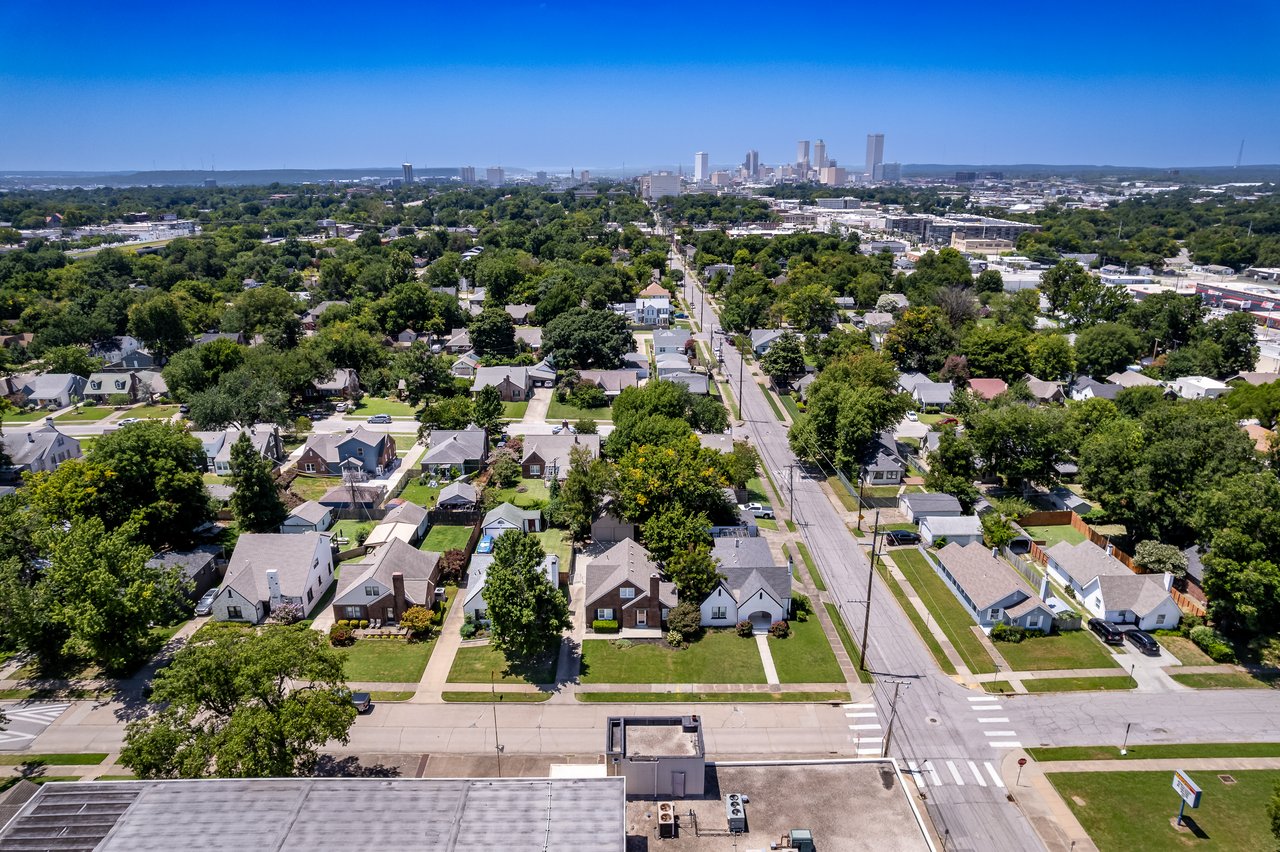
East Tulsa offers a middle ground — acquisition prices below South Tulsa and Midtown, a stable working-class rental market, and reasonable quality-of-life indicators that support consistent tenancy. The area along 11th Street and in established East Tulsa neighborhoods has attracted investors who want Tulsa cash flow without North Tulsa risk levels.
Midtown
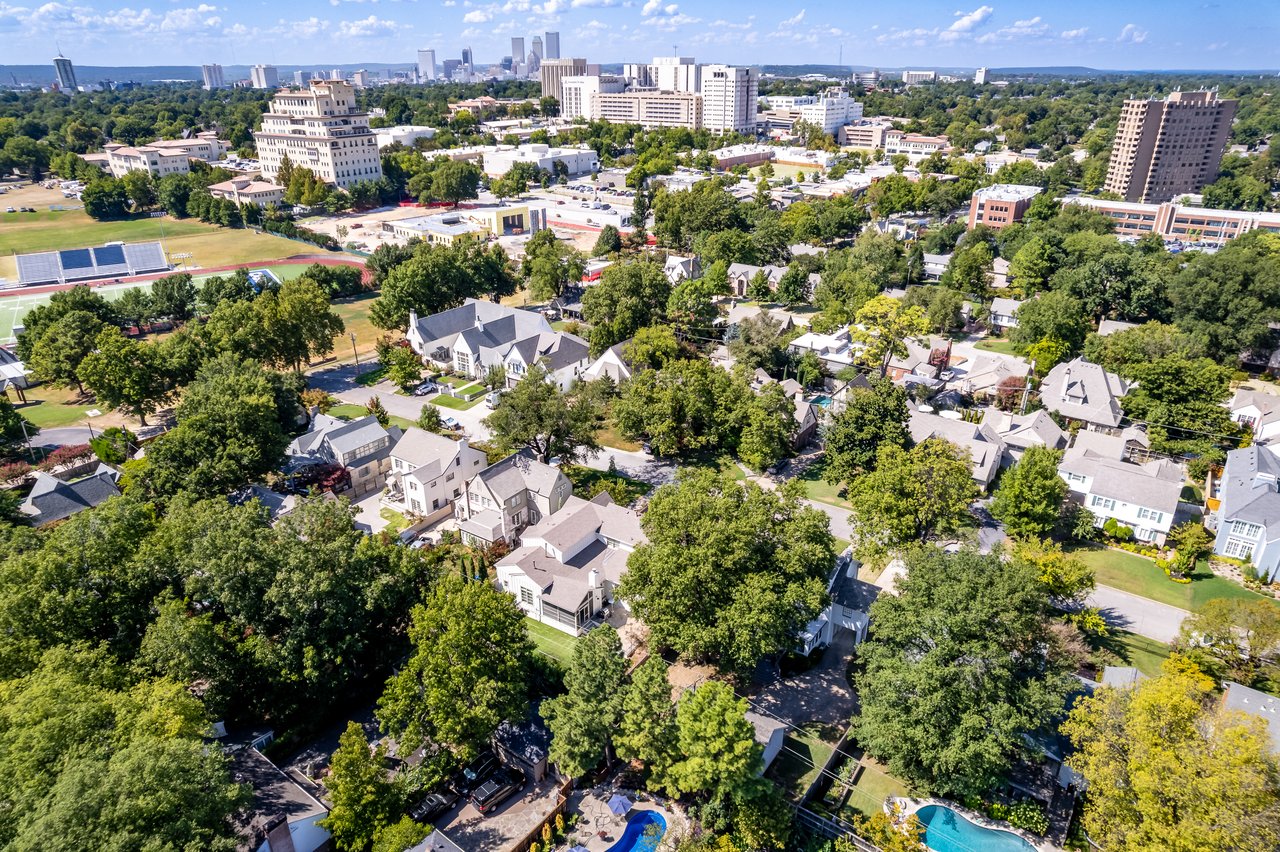
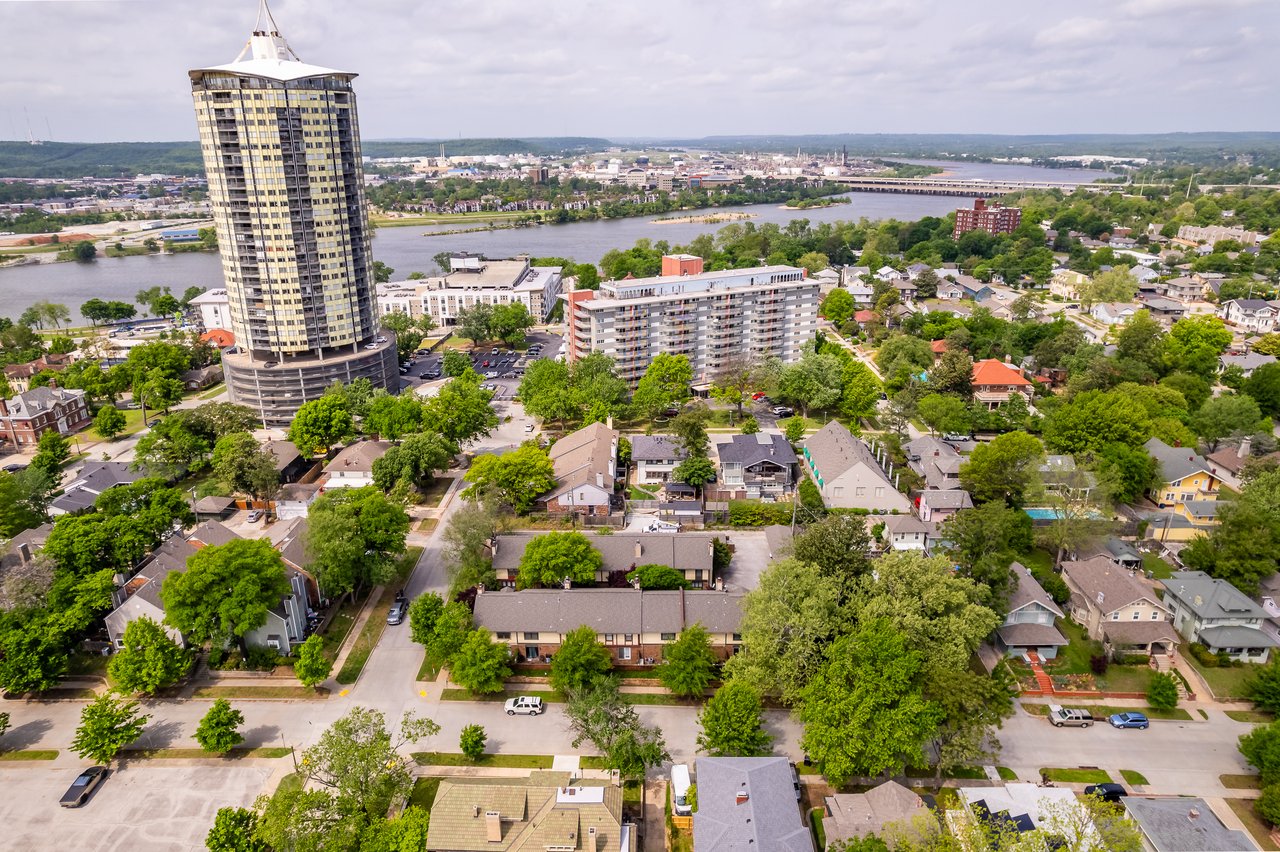
Midtown Tulsa — Brookside, Cherry Street, the Pearl District — offers the best tenant quality and the lowest vacancy rates, at higher acquisition prices than other investment corridors. The investor math is tighter here than in East or North Tulsa, but the quality of tenants, the low vacancy, and the long-term appreciation potential are stronger.
Midtown multifamily — duplexes and small apartment buildings — is particularly sought after and rarely sits on the market.
Suburbs: Broken Arrow, Owasso, Bixby
Suburban single-family rentals in Broken Arrow, Owasso, and Bixby attract working professional tenants, generate low vacancy, and require less intensive management than urban properties — but purchase prices are higher and cash flow margins thinner. These markets work best for investors prioritizing low-hassle management and tenant quality over maximum cash flow.
What Investors Need to Know Before Buying in Tulsa
Property Management
The difference between a successful Tulsa rental investment and a frustrating one often comes down to property management. Self-managing from out of state is possible but demanding. Local professional property management — typically 8–12% of monthly rent plus leasing fees — provides tenant screening, maintenance coordination, rent collection, and legal compliance that significantly reduces owner burden.
Vet property managers carefully. Ask for references from current clients, ask about their average vacancy rate and how they handle evictions, and confirm they are licensed through the Oklahoma Real Estate Commission. Poor property management is one of the most common reasons rental investments underperform expectations.
Oklahoma Landlord-Tenant Law
Oklahoma's landlord-tenant laws govern your rights and obligations as a rental property owner. Key provisions:
- Security deposits: Oklahoma allows landlords to collect up to the equivalent of two months' rent as a security deposit
- Notice requirements: Landlords must provide specific notice periods before entering a property, raising rent, or initiating eviction
- Eviction process: Oklahoma's eviction process — forcible entry and detainer — is handled through the district court system. With proper documentation and legal compliance, Oklahoma evictions can move relatively quickly compared to some states — but the process still requires following specific legal procedures
- Required disclosures: Oklahoma requires specific disclosures to tenants including information about the property, lease terms, and security deposit handling
Consult an Oklahoma real estate attorney before establishing your landlord policies and lease documents. Using an Oklahoma-specific lease prepared by a legal professional protects you significantly better than a generic template.
Financing Investment Property in Tulsa
Investment property financing is structurally different from primary residence financing:
- Down payment: Conventional investment property loans typically require 20–25% down
- Interest rate: Investment property rates run 0.5–1.0% higher than primary residence rates
- Reserve requirements: Lenders often require 6 months of PITI in reserves for investment properties
- Debt-to-income: Additional rental properties add to DTI calculations, which can limit how many financed properties you can acquire through conventional channels
Beyond conventional financing, Tulsa investors use:
- DSCR loans (Debt Service Coverage Ratio): Qualify based on the property's income rather than personal income — popular with investors who have complex tax situations or multiple properties
- Portfolio loans: Local Oklahoma community banks and credit unions who hold loans in their own portfolios rather than selling to secondary market — more flexible underwriting for investors with unusual situations
- Hard money: Short-term, asset-based lending used for acquisitions and rehabs before refinancing into permanent financing — higher rates but fast, flexible closing
- Seller financing: Increasingly relevant in today's rate environment — sellers who own free and clear can often offer terms that beat conventional financing rates
Insurance for Oklahoma Investment Properties
Oklahoma's tornado, hail, and wind exposure makes insurance a meaningful expense for investment property owners — and one that has increased as insurers have repriced Oklahoma risk. Budget for higher-than-average property insurance costs and shop multiple carriers. Some Tulsa investors have found that older roofs significantly impact insurance availability and cost — factor roof age into your acquisition underwriting.
Evaluating a Tulsa Investment Property: The Key Metrics
Cap Rate
Cap rate (capitalization rate) measures a property's annual net operating income as a percentage of purchase price — independent of financing.
Cap Rate = Net Operating Income ÷ Purchase Price
Net operating income = gross rental income minus vacancy allowance minus operating expenses (taxes, insurance, management, maintenance, reserves) — before debt service.
Tulsa single-family rentals typically generate cap rates in the 5–8% range depending on location, condition, and acquisition price. Multifamily and value-add properties can push higher. Cap rates below 5% indicate thin margins; above 8% indicate either a strong deal or elevated risk.
Cash-on-Cash Return
Cash-on-cash return measures annual pre-tax cash flow as a percentage of total cash invested — the metric that tells you what your actual deployed capital is earning.
Cash-on-Cash = Annual Cash Flow ÷ Total Cash Invested
For a leveraged Tulsa acquisition generating $1,800/year in cash flow on $45,000 invested (down payment plus closing costs plus initial repairs): 1,800 ÷ 45,000 = 4% cash-on-cash return.
Target cash-on-cash returns vary by investor — but most serious investors look for 6–10%+ on leveraged acquisitions. Getting there in today's rate environment requires either stronger rent-to-price ratios, below-market acquisition, or more equity in the deal.
Gross Rent Multiplier
A quick screening metric — purchase price divided by annual gross rent. In Tulsa's market, GRM below 12 generally indicates a candidate worth underwriting further. Above 15 suggests tight margins.
Frequently Asked Questions
Q: Is Tulsa a good market for out-of-state real estate investors in 2026?
Yes — with the right preparation. Tulsa's price-to-rent ratios are more favorable than most major metros, property management infrastructure is well-developed, and the market is accessible to remote investors who build the right local team (agent, property manager, contractor). The most common out-of-state investor mistake is underestimating the importance of local expertise — particularly in property management and tenant screening.
Q: What type of investment property performs best in Tulsa?
Small multifamily (2–4 units) consistently generates the strongest risk-adjusted returns for Tulsa investors — stronger cash flow per dollar invested than single-family, with diversified vacancy risk. Single-family in strong rental corridors is accessible and manageable. BRRRR on distressed single-family can generate strong equity returns for investors with renovation experience.
Q: How do I find off-market investment properties in Tulsa?
The most reliable paths to off-market inventory: working with an agent who actively cultivates off-market relationships, direct mail campaigns targeting specific property profiles, driving for dollars (identifying distressed properties), networking with wholesalers active in the Tulsa market, and building relationships with probate and estate attorneys. The best deals in Tulsa rarely appear on the MLS first.
Q: What is the average rent for a single-family home in Tulsa in 2026?
Rents vary significantly by area, bedroom count, and property condition. Approximate 2026 ranges: 2BR/1BA entry level — $850–$1,100/month; 3BR/2BA mid-range — $1,100–$1,500/month; 3–4BR updated — $1,400–$1,900/month; 4BR+ premium — $1,800–$2,500+/month. South Tulsa and suburban markets command premiums over East and North Tulsa at comparable bedroom counts.
Q: Do I need an LLC to own investment property in Tulsa?
This is a legal and tax question that requires consultation with an Oklahoma attorney and CPA rather than a general answer. Many investors use LLCs for liability protection and organizational clarity, but the structure has implications for financing (conventional lenders typically won't lend to LLCs), insurance, and taxation. Get professional advice before structuring your first acquisition.
Conclusion
Tulsa is not a get-rich-quick market. It's a get-paid-consistently market — one where the fundamentals support sustainable returns for investors who do the work, buy right, manage well, and think in years rather than months.
The investors who do well here aren't the ones chasing appreciation headlines. They're the ones running disciplined underwriting, building local teams, and acquiring properties that generate real income in a real economy. That approach works in Tulsa. It's worked for a long time. And in 2026, when many louder markets have made the math increasingly difficult, Tulsa's fundamentals look better by comparison, not worse.
Thinking About Investing in Tulsa Real Estate? MORE Agency Works With Investors Every Day.
Finding the right investment property requires a different skill set than finding the right home — and MORE Agency brings both. We work with local and out-of-state investors to identify opportunities, evaluate deals, and navigate the Tulsa market with the local intelligence that makes the difference between a good investment and a great one.
Contact MORE Agency for an investor consultation and let's talk about what you're looking for and where to find it in Tulsa.