Tulsa doesn't always make the shortlist when people are researching cities to relocate to. It doesn't have the coastal cachet of Miami or the tech buzz of Austin. But for the people who do their homework and actually move here, Tulsa has a habit of exceeding expectations.
Low cost of living. Legitimate arts and food scene. Outdoor recreation. Affordable housing. A growing economy. And a genuine sense of community that larger cities have long since lost.
If you're considering a move to Tulsa — whether for a job, a lower cost of living, family, or simply a change — this guide gives you the honest, complete picture of what life actually looks like here.
Why People Are Moving to Tulsa
Tulsa has seen steady in-migration over the past several years, driven by a combination of factors that make it increasingly attractive to people relocating from more expensive metros.
Affordability is the most cited reason. Remote workers, young families, and retirees from cities like Dallas, Denver, Chicago, and both coasts are consistently discovering that their money goes dramatically further in Tulsa. A home that would cost $700,000 in a mid-tier coastal city often has a Tulsa equivalent priced under $300,000.
Tulsa Remote put the city on the national map. The program — which offered $10,000 cash incentives to remote workers who relocated to Tulsa — attracted thousands of new residents and generated significant national press coverage. The program helped shift the perception of Tulsa from a flyover city to a genuine relocation destination.
Quality of life seals the deal for most people once they visit. Tulsa has world-class arts institutions, a thriving restaurant and bar scene, excellent parks and trails, a revitalized downtown, and a pace of life that most big-city transplants find refreshing.
Cost of Living in Tulsa
Tulsa's cost of living is one of its most compelling advantages. Across every major category, Tulsa compares favorably to virtually every other mid-size metro in the country.
Housing
The median home price in the Tulsa metro in 2026 sits well below the national median — making homeownership accessible to a broad range of income levels. Renters also find more space for their money than in comparable cities.
A $1,500/month budget rents a comfortable 2–3 bedroom home in many Tulsa neighborhoods. That same budget might get you a studio apartment in Denver or a one-bedroom in Dallas.
Groceries and Everyday Expenses
Grocery prices, dining out, and everyday expenses in Tulsa run roughly 10%–15% below the national average. A dinner out at a solid local restaurant runs $15–$25 per person. A craft beer at a local bar is $5–$7.
Transportation
Most Tulsa residents drive — the city is spread out and public transit is limited outside of downtown. Gas prices in Oklahoma are typically below the national average, and the lack of traffic congestion compared to larger cities means commute times are generally manageable.
Utilities
Oklahoma utility costs are moderate. Air conditioning runs hard in summer — July and August in Tulsa are genuinely hot — and heating costs in winter are real. Budget accordingly, particularly if you're moving from a mild climate.
Taxes
Oklahoma has no city income tax in Tulsa. State income tax rates are moderate. Property taxes are among the lower rates in the country, which meaningfully reduces the total cost of homeownership compared to states like Texas or Illinois.
Tulsa Neighborhoods: Where Should You Live?
Tulsa is a city of distinct neighborhoods, each with its own personality and price point. Here's a breakdown of the areas most commonly considered by newcomers.
Midtown Tulsa
Midtown is the heart of Tulsa's established residential culture — tree-lined streets, character homes from the 1920s through 1960s, walkable to coffee shops, restaurants, and parks. It's the neighborhood that most surprises out-of-towners with its charm.
Midtown attracts a mix of young professionals, growing families, and people who prioritize neighborhood character over square footage. Home prices here are higher than the metro average but still reasonable by national standards.
Best for: People who want walkability, character architecture, and a strong neighborhood identity.
South Tulsa
South Tulsa is newer, more suburban, and home to some of the area's most highly rated schools. Neighborhoods like Woodland Hills, Southern Hills, and the areas near 91st and Yale are characterized by well-maintained subdivisions, retail corridors, and strong family infrastructure.
It's a popular landing zone for families relocating for schools and for buyers who want newer construction and more space.
Best for: Families prioritizing schools, newer homes, and suburban amenities.
Broken Arrow
Technically a separate city, Broken Arrow sits on Tulsa's eastern edge and functions as part of the metro. It's one of the fastest-growing cities in Oklahoma and consistently ranks as one of the safest and most livable communities in the state.
Broken Arrow offers strong schools, a mix of older and newer construction, a revitalized Rose District downtown, and a family-friendly atmosphere. Home prices are competitive and inventory turns over reliably.
Best for: Families, first-time buyers, and people who want suburban living with strong community infrastructure.
Jenks
Jenks has grown significantly over the past decade and is now one of the most sought-after communities in the metro. The Jenks school district draws families specifically, and the riverside area along the Arkansas River has developed into a genuine destination with dining, retail, and entertainment.
Best for: Families focused on schools, buyers who want a small-town feel with growing amenities.
Owasso
Located north of Tulsa, Owasso has boomed with new residential development over the past decade. It offers newer construction, strong schools, and a more affordable entry point than Broken Arrow or Jenks in some segments.
Best for: Buyers seeking new construction, families, and people who prefer the north side of the metro.
Bixby
Bixby sits south of Tulsa along the Arkansas River and has become one of the premium family destinations in the metro — known for its excellent schools, newer upscale development, and strong sense of community. It carries a slightly higher price point to match its reputation.
Best for: Families willing to pay a premium for top-tier schools and newer upscale neighborhoods.
The Pearl District and Downtown
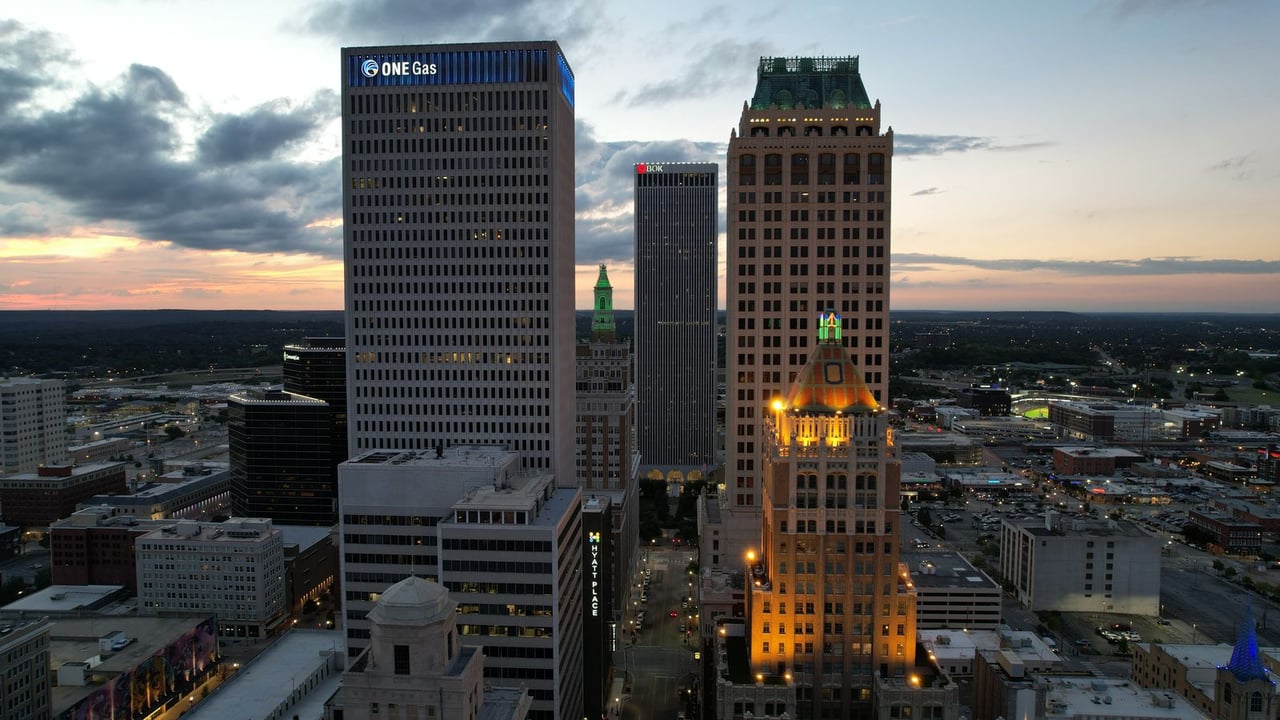
Tulsa's urban core has undergone significant revitalization over the past decade. The Pearl District, Brady Arts District, Blue Dome District, and areas surrounding the Gathering Place park offer urban living with genuine walkability, a strong arts and dining scene, and a sense of energy that surprises most visitors.
Condos, townhomes, and converted loft spaces make up most of the housing stock. It's a smaller market segment but one with genuine appeal for buyers who prioritize urban lifestyle over square footage.
Best for: Young professionals, empty nesters, and urban lifestyle buyers.
East and North Tulsa
These areas offer the most affordable housing in the metro and are where buyers can find the most space for their money. They are more diverse, more working-class, and less polished than South Tulsa or Broken Arrow — but certain pockets are seeing genuine investment and improvement.
Best for: Budget-conscious buyers, investors, and buyers who prioritize value over neighborhood prestige.
Schools in Tulsa
School quality is one of the most common considerations for families relocating to Tulsa — and the answer varies significantly by location.
Tulsa Public Schools (TPS) serves the city proper. Quality varies significantly by school and has been a point of community debate and ongoing reform effort for years. Some TPS schools are excellent; others lag behind. Families focused on schools often look toward suburban districts.
The suburban districts consistently outperform: Broken Arrow, Jenks, Bixby, Owasso, and Union are the names that come up most frequently in conversations about school quality. These districts are a primary driver of residential demand in their respective communities.
Private schools are also well-represented in Tulsa — several strong options exist across religious and independent categories for families who prioritize that path.
Researching specific schools — not just districts — is always worth doing before committing to a neighborhood.
The Job Market in Tulsa
Tulsa's economy has diversified meaningfully over the past decade. While energy remains an important sector, it no longer defines the city the way it once did.
Major sectors in Tulsa's 2026 economy:
- Energy — Still significant; Tulsa remains a hub for oil and gas companies
- Aerospace and defense — One of the largest and most stable employment sectors in the metro; American Airlines' maintenance hub is one of the largest employers in Oklahoma
- Healthcare — A major and growing employer; St. Francis Health System, St. John Health System, and Hillcrest HealthCare System are large institutional employers
- Technology — Growing, particularly following Tulsa Remote and related talent attraction efforts
- Logistics and distribution — Tulsa's central location and infrastructure make it attractive for distribution operations
- Finance and insurance — Several significant employers in this sector call Tulsa home
Remote workers make up a growing share of Tulsa's population — the city actively recruits them and the infrastructure to support remote work (coworking spaces, fast internet, coffee shop culture) has grown accordingly.
Things to Do in Tulsa
One of the most common surprises for people moving to Tulsa is how much there is to do. The city punches well above its weight on arts, culture, and outdoor recreation.
Arts and Culture
The Philbrook Museum of Art is a genuine world-class institution — a former oil baron's Italian villa turned art museum set on 23 acres of formal gardens. It regularly surprises visitors who weren't expecting something of its caliber in Oklahoma.
The Gilcrease Museum houses one of the largest and most significant collections of American Western art and Native American artifacts in the world — currently undergoing a major expansion.
Tulsa's music history runs deep. The city has authentic connections to Bob Dylan, Leon Russell, the Tulsa Sound, and a rich blues and roots tradition that serious music fans find genuinely compelling.
Outdoor Recreation
The Gathering Place is Tulsa's crown jewel of recent civic investment — a 100-acre world-class park along the Arkansas River that opened to national acclaim and is consistently cited as one of the best urban parks in the country. It's free, beautifully designed, and draws residents from across the metro.
The River Parks trail system offers miles of paved trails along the Arkansas River connecting multiple neighborhoods and parks — popular with cyclists, runners, and families.
Keystone Lake and Skiatook Lake provide boating, fishing, and water recreation within 30–45 minutes of the city.
The Osage Hills and the broader northeastern Oklahoma landscape offer hiking, camping, and nature access in a region that many people don't associate with Oklahoma.
Food and Drink
Tulsa's food scene has genuinely evolved. The Brady Arts District, Cherry Street, and Brookside neighborhoods anchor a restaurant culture that goes well beyond what you'd expect from a city this size. James Beard-recognized chefs, craft cocktail bars, independent coffee roasters, and a growing brewery scene have all taken root here.
This is not a city where you'll be eating at chains every night — unless you want to.
Weather in Tulsa: What to Expect
Oklahoma weather is real and it matters. Newcomers from mild climates should know what they're signing up for.
Summers are hot. July and August regularly see highs of 95°F–105°F. Air conditioning is not optional — it's essential. Budget accordingly for utility costs during peak summer months.
Winters are variable. Tulsa winters are generally mild by northern standards but can deliver ice storms that are more disruptive than snow. Ice on roads is the primary winter hazard in Tulsa, not snow depth.
Spring and fall are exceptional. October in Tulsa is legitimately beautiful. Spring brings green, blooming landscapes and comfortable temperatures — along with the start of severe weather season.
Tornadoes and severe weather are real. Tulsa sits in Tornado Alley. Severe thunderstorms, hail, and tornadoes are part of life here. Most Tulsans take this in stride — storm shelters are common in homes, and the local culture around weather awareness is strong. But newcomers from coastal cities or the Pacific Northwest should go in knowing this is part of the package.
Practical Tips for Relocating to Tulsa
Visit before you commit to a neighborhood. Tulsa's neighborhoods feel very different from each other. Spending a weekend driving around, eating locally, and getting a feel for different areas is worth doing before deciding where to live.
Get pre-approved before you land. If you're planning to buy, start the mortgage process before you arrive. Tulsa's most desirable homes move. Being pre-approved lets you move quickly when you find the right place.
Budget for a car. Tulsa is a driving city. Public transit exists but is limited. Most residents need a vehicle to navigate daily life comfortably.
Explore the food scene early. One of the fastest ways to fall in love with Tulsa is to eat your way through Cherry Street, Brookside, and the Brady Arts District. Give it a weekend before you decide whether the city is for you.
Connect with the community. Tulsa has a genuinely welcoming culture, and the transplant community is large enough that you'll find other people who made the same move. Organizations like Tulsa Remote alumni networks, neighborhood associations, and local business communities make it easy to build a social life faster than you might expect.
Frequently Asked Questions
Q: Is Tulsa a good place to live?
For most people who give it a genuine chance, yes. The combination of affordability, quality of life, arts and culture, and community makes Tulsa a city that consistently earns loyalty from residents who came in skeptical.
Q: Is Tulsa safe?
Like most cities, safety varies significantly by neighborhood. South Tulsa, Broken Arrow, Jenks, Bixby, and Owasso are among the safest communities in the state. Parts of north and east Tulsa have higher crime rates. Research specific neighborhoods rather than relying on citywide statistics.
Q: How does Tulsa compare to Oklahoma City?
Both are solid mid-size Oklahoma cities, but they have distinct personalities. Oklahoma City is the state capital, larger, and more politically prominent. Tulsa has a stronger arts identity, a more walkable urban core, and many residents feel a stronger sense of civic pride and distinctiveness. The two cities have a friendly rivalry — most Oklahomans have a preference.
Q: What is the Tulsa Remote program?
Tulsa Remote was a program that offered $10,000 in incentives to remote workers who relocated to Tulsa. While the formal incentive program has evolved, its legacy is a large transplant community and a city infrastructure increasingly built to support remote work.
Q: How far is Tulsa from major cities?
Tulsa is approximately 1.5 hours northeast of Oklahoma City, 4 hours from Dallas, 6.5 hours from Kansas City, and 7 hours from Denver. It's centrally located in the south-central U.S. and serves as a regional hub.
Conclusion
Tulsa won't be the right fit for everyone — no city is. But for buyers and renters who are willing to give it a real look, Tulsa offers a combination of affordability, quality of life, and genuine character that is increasingly rare in today's housing market.
It's a city that rewards the people who arrive curious and open-minded. Most of them end up staying longer than they planned — and many end up putting down roots.
Relocating to Tulsa? MORE Agency Can Help You Find Your Place Here.
Whether you're moving from across the country or just across the state, the agents at MORE Agency specialize in helping relocating buyers find the right neighborhood, the right home, and the right fit for their life in Tulsa.
Contact MORE Agency today for a relocation consultation — we'll help you navigate the Tulsa market from wherever you are right now.