Tulsa has been on a lot of "best cities" lists over the past several years — and unlike some cities that make those lists on hype, Tulsa's reputation is built on something real. The cost of living is genuinely low relative to quality of life. The food scene is legitimately good. The arts and culture infrastructure is more developed than a city this size has any right to expect. And the people are — with very little irony — genuinely friendly.
But moving to a city you don't know is a significant decision, and the "best cities" articles tend to be long on enthusiasm and short on the practical information that actually determines whether your move goes well. Which neighborhood fits your life? What does weather really mean in terms of daily experience? What should you know about the housing market before you start your search?
This guide is written from the perspective of people who work in Tulsa real estate every day — not a travel writer who spent a weekend. Here's what you actually need to know.
Why People Are Moving to Tulsa in 2026
The in-migration to Tulsa that accelerated during and after the pandemic hasn't reversed. People are coming from Dallas, Denver, Kansas City, Chicago, the coasts, and everywhere in between — for a consistent set of reasons.
Cost of living: Tulsa consistently ranks among the most affordable mid-size cities in the United States. The median home price in the Tulsa metro in 2026 is a fraction of what comparable homes cost in Denver, Austin, or any coastal market. Your dollar goes significantly further here — and that difference compounds over time in the form of equity, savings, and financial flexibility that higher-cost markets don't allow.
Quality of life: The Gathering Place — a world-class riverside park that opened in 2018 and continues expanding — put Tulsa on the national map in a way that years of "hidden gem" articles hadn't. The Brady Arts District, the Blue Dome District, the Cherry Street corridor, and the growing restaurant and entertainment scene make Tulsa a genuinely livable city, not just an affordable one.
Remote work compatibility: Tulsa's affordability makes it a natural fit for remote workers who can live anywhere. The Tulsa Remote program — which offered financial incentives for remote workers to relocate — has graduated thousands of participants and created a community of transplants who've built networks, businesses, and roots here. The program's alumni community is one of the most active relocation support networks of any mid-size American city.
Geography and access: Tulsa sits at a practical crossroads — a reasonable drive to Dallas, Kansas City, Oklahoma City, and Fayetteville/Bentonville (the growing Northwest Arkansas tech and retail corridor). Two major interstates, a regional airport with expanding direct service, and central US location make Tulsa more connected than its size suggests.
Genuine community: This is harder to quantify but consistently cited by transplants. Tulsa has a civic culture that punches above its weight — people who genuinely invest in the city, a philanthropic community that funds significant public amenities, and a social fabric that makes meeting people and building community more accessible than in larger, more anonymous metros.
Understanding Tulsa's Neighborhoods Before You Choose
The single most important decision a Tulsa newcomer makes — often before fully understanding the city — is where to live. Getting this right shapes everything: commute, community, school options, walkability, and the daily texture of life in Tulsa.
Midtown Tulsa
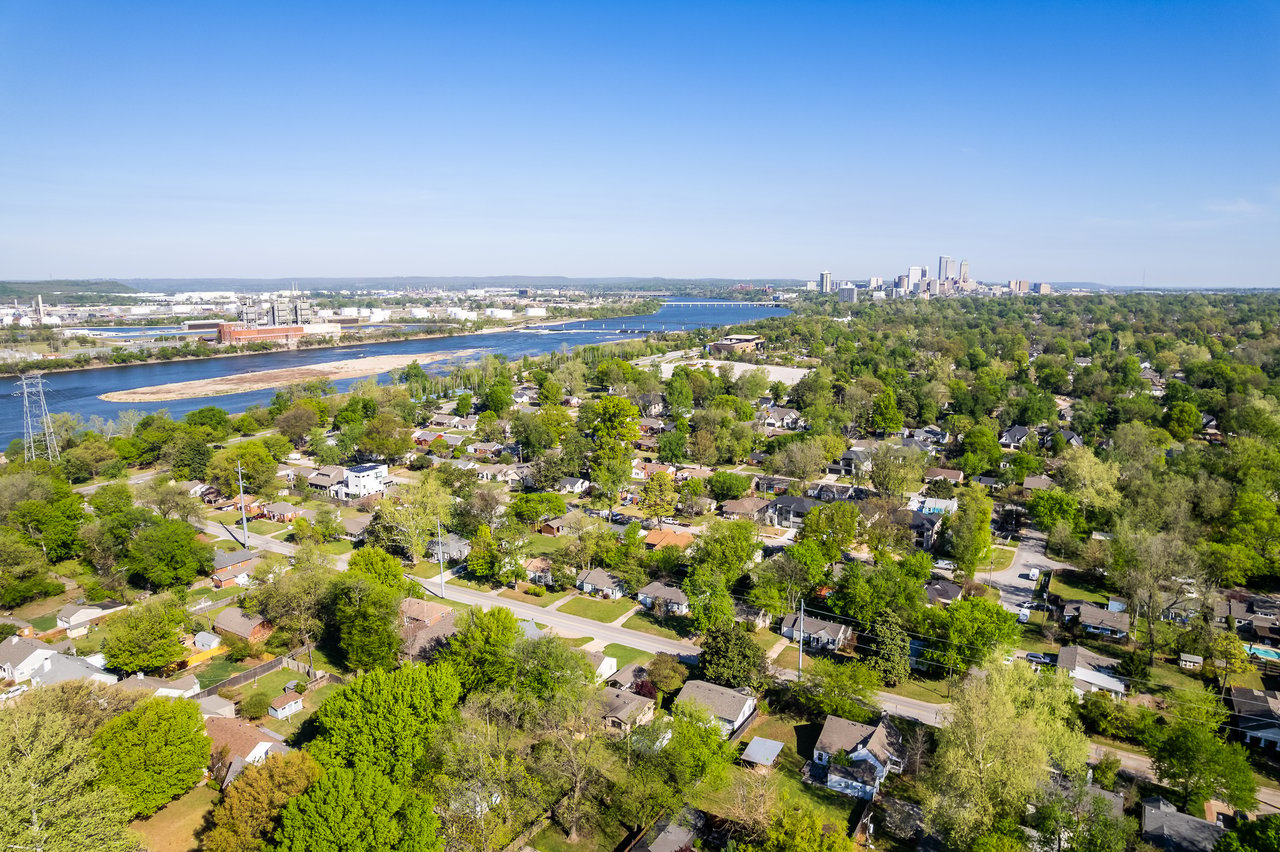
The most discussed and most desired neighborhood corridor for newcomers — and for good reason. Midtown encompasses a band of historic neighborhoods running roughly from downtown south to about 51st Street, bounded by Peoria on the west and Yale on the east. It includes Maple Ridge, Swan Lake, Brookside, the Cherry Street area, Kendall-Whittier, and several others.
What Midtown offers: Architectural character (bungalows, Tudor revivals, art deco apartments from the 1920s–1940s oil boom era), walkability to Tulsa's best restaurants and coffee shops, proximity to downtown, and a genuinely urban-feeling neighborhood experience that most Oklahoma cities don't provide.
What Midtown costs: More than most of Tulsa. Entry-level Midtown properties start around $200,000 for smaller homes needing work; the most desirable blocks run $400,000–$800,000+ for renovated character homes. The premium is real and has grown as transplant demand has increased.
Best for: Young professionals, empty nesters, remote workers who value walkability, buyers who prioritize neighborhood character over square footage.
South Tulsa
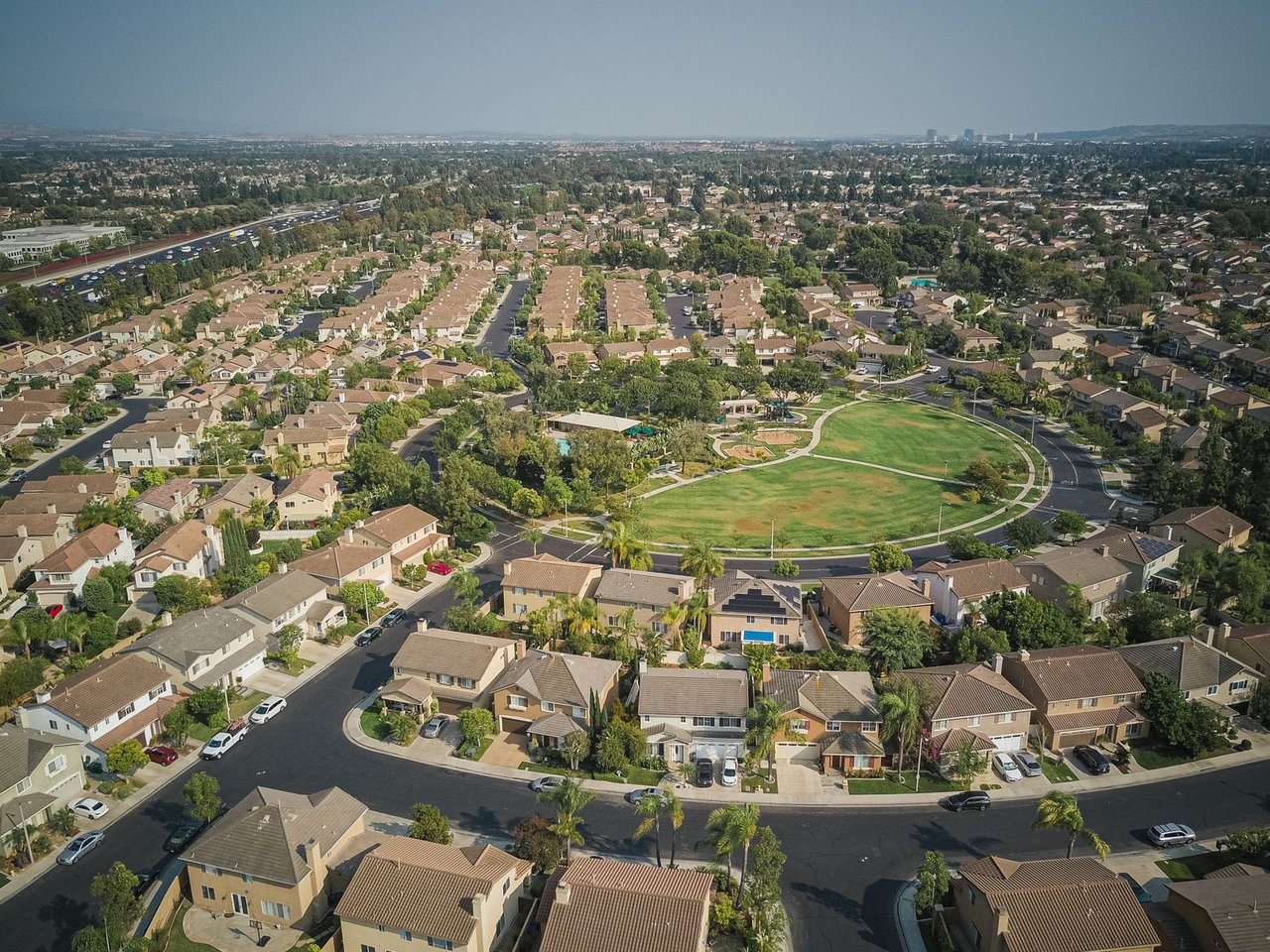
The broad suburban corridor south of 51st Street, extending to the Jenks and Bixby borders. This is where Tulsa's family market is concentrated — larger lots, newer construction, excellent schools, and the retail and restaurant infrastructure that suburban life expects.
The school driver: Jenks Public Schools and Union Public Schools — both in the south Tulsa corridor — are among Oklahoma's highest-performing districts, and this reality drives sustained family buyer demand. Parents who prioritize school performance often choose south Tulsa specifically for school district access.
What south Tulsa offers: More square footage per dollar than Midtown, newer construction options, excellent school districts, lower crime rates, and the full suburban amenity set.
What south Tulsa costs: Mid-range pricing — $250,000–$500,000 is the active range for most family buyers, with new construction pushing into higher price points.
Best for: Families with school-age children, buyers prioritizing square footage and newer construction, those coming from suburban environments who want comparable infrastructure.
The Arts District and Downtown
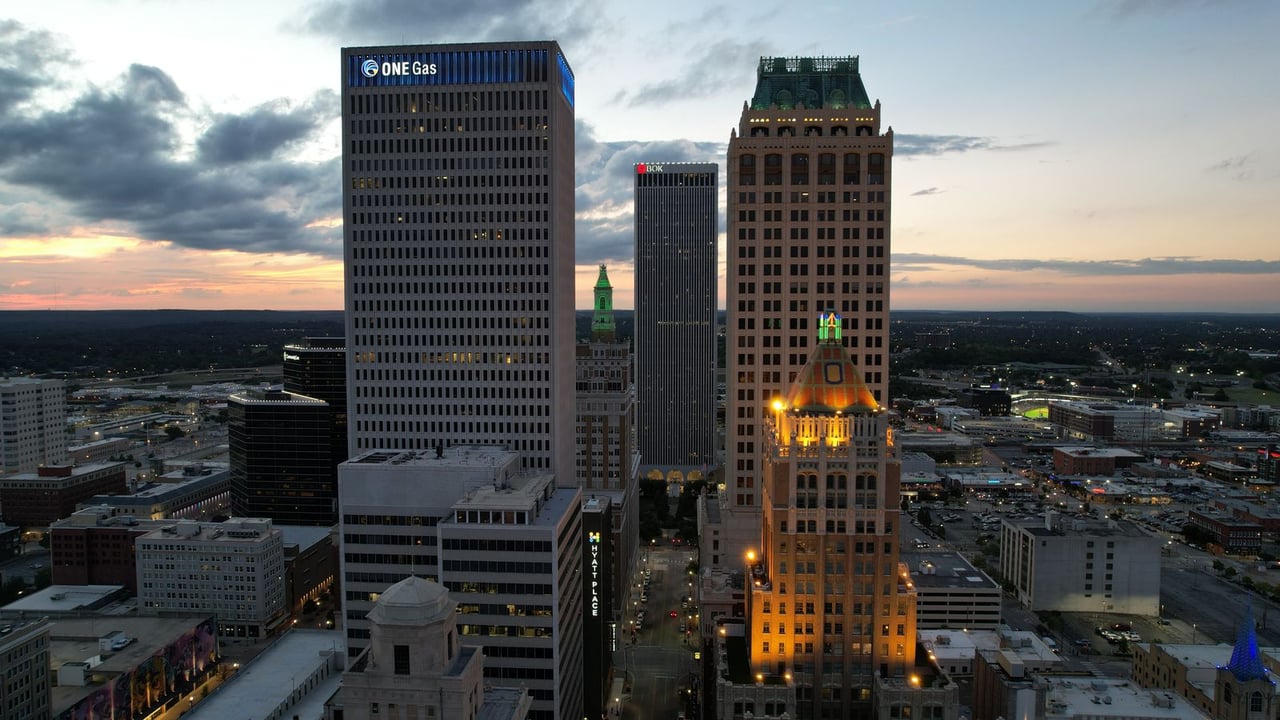
Tulsa's urban core has transformed significantly over the past decade. The Brady Arts District north of downtown, the Blue Dome District just east of downtown, and the developing Pearl District have created a genuine urban residential option — loft apartments, renovated commercial buildings converted to residential, and a growing number of purpose-built urban residential projects.
What downtown offers: Walkability to Tulsa's arts, entertainment, and restaurant scene; proximity to the BOK Center and ONEOK Field (the Tulsa Drillers' ballpark); a community of urban-lifestyle residents who chose city living deliberately.
What downtown costs: Varies significantly — renovated loft apartments can be found at relatively accessible price points; premium urban condos run higher. The for-sale residential market downtown is less developed than the rental market, meaning more renters than owners in many downtown buildings.
Best for: Urban lifestyle buyers, young professionals, transplants wanting maximum social access to Tulsa's scene during an exploratory period.
Broken Arrow
The largest incorporated city in the Tulsa metro by some measures — Broken Arrow sits southeast of Tulsa and has its own distinct identity while functioning as part of the metro. It offers excellent schools (Broken Arrow Public Schools is highly regarded), significant retail and restaurant development along its corridors, and housing at a range of price points.
What Broken Arrow offers: A full suburban amenity set, strong schools, newer construction neighborhoods, and slightly more space than comparable south Tulsa neighborhoods at similar price points.
Best for: Families seeking the suburban experience with strong schools at accessible price points; those working in the southeast Tulsa or Broken Arrow employment corridor.
Owasso
Northeast of Tulsa along US-169, Owasso has been one of the fastest-growing communities in the metro for more than a decade. Its appeal is driven by Owasso Public Schools — a consistently high-performing district — and a growing commercial corridor that reduces residents' dependence on Tulsa proper for shopping and dining.
Best for: Families prioritizing north-side school districts; those working in north Tulsa, Claremore, or the Cherokee Nation employment corridor in Catoosa.
North Tulsa
An honest mention for a part of Tulsa that often gets omitted from newcomer guides: north Tulsa — including the historic Greenwood District (the original Black Wall Street), Mohawk Park, and the corridors north of downtown — is experiencing real investment and early-stage appreciation. For buyers with community investment in mind and patience for a longer trajectory, north Tulsa represents Tulsa's most significant value opportunity.
Best for: Community-committed buyers, investors with long time horizons, buyers priced out of Midtown who want urban-adjacent character at lower entry points.
Tulsa's Cost of Living: The Numbers
Housing: The median home price in the Tulsa metro in 2026 runs approximately $220,000–$250,000 — compared to $400,000+ in Denver, $450,000+ in Austin, and $700,000+ in many coastal markets. Renters find similar advantages: a one-bedroom apartment in a desirable Tulsa neighborhood rents for $900–$1,400/month, compared to $2,000–$3,500+ in higher-cost metros.
Property taxes: Oklahoma's property taxes are among the lowest in the nation. The effective property tax rate in Tulsa County typically runs 1.0–1.2% of assessed value — significantly lower than Texas (1.8–2.5%), Illinois (2%+), or New Jersey (2%+). Homestead exemptions further reduce the taxable value for primary residences.
State income tax: Oklahoma has a graduated income tax with a top rate of 4.75% — lower than many states but not zero. No city income tax applies in Tulsa.
Groceries and everyday expenses: Tulsa's grocery, dining, and everyday expense costs are consistently 10–15% below the national average. A dinner out at a good Tulsa restaurant costs meaningfully less than the same experience in Dallas or Denver.
The practical summary: A household that can afford a $450,000 home in Denver is looking at $700,000+ in mortgage, taxes, and cost-of-living equivalent to a $300,000–$350,000 Tulsa home with Tulsa costs. The lifestyle arbitrage is real and substantial.
Weather: The Honest Version
Oklahoma weather deserves an honest conversation — not because it should scare you away, but because transplants who arrive unprepared for it are the ones who struggle.
Tornadoes
Oklahoma is in the heart of Tornado Alley. Tornadoes are real, they occur with some regularity in the Tulsa area (though Tulsa itself has historically been somewhat protected by geographic factors compared to the OKC metro), and they should be taken seriously. What this means practically:
- Know where your storm shelter is — above-ground safe rooms and in-ground shelters are common in Oklahoma homes and are a genuine market differentiator. Homes with shelters command a premium for good reason.
- Download the Oklahoma emergency alert apps and have a weather radio. Pay attention to watch vs. warning distinctions.
- Understand the seasonal pattern: late spring (April–June) is peak tornado season, with secondary activity in the fall.
Tornadoes are a real risk that Oklahomans manage with preparation, not with panic. Most Tulsans live their entire lives without significant tornado impact — but preparation is non-negotiable.
Hail
Tulsa is in "Hail Alley." Significant hail events — stones large enough to damage vehicles and roofs — occur multiple times per year in some years. This is not a minor consideration:
- Homeowner's insurance with appropriate hail coverage is essential, not optional
- Metal roofs and impact-resistant roofing materials are increasingly popular in Tulsa for their lower insurance premiums and durability
- Covered parking — a garage — has real practical value in Tulsa that it doesn't in most markets
Heat
Oklahoma summers are genuinely hot. June through September regularly produces temperatures above 95°F, with heat index values frequently exceeding 105°F. Air conditioning is not a luxury — it's essential infrastructure. An HVAC system in good working order is a genuine quality-of-life necessity, and Oklahoma's summer electricity costs reflect heavy AC use.
Winter
Tulsa winters are mild by northern standards but can include ice storms — a combination of freezing rain and sleet that is more disruptive than snow. Ice accumulation shuts down roads and can down power lines. Having a few days of supplies at home and an understanding that Tulsa doesn't have the ice management infrastructure of northern cities is practical winter preparation.
The Good News
Tulsa gets four genuine seasons. Spring and fall in Oklahoma are spectacular — warm days, colorful foliage, low humidity, the kind of weather that makes you want to be outside. The Gathering Place, Tulsa's trail system, the rivers and lakes within easy driving distance, and the overall outdoor life of the city is most fully enjoyed in the April–June and September–November windows.
Jobs and Economy in Tulsa
Tulsa's economy is more diversified than its oil and gas history suggests, though energy remains a component.
Healthcare: One of Tulsa's largest employment sectors. Saint Francis Health System, Hillcrest HealthCare System, Ascension St. John, and OSU Medical Center are major employers with broad hiring across clinical and administrative roles.
Aerospace and manufacturing: Tulsa has a significant aerospace manufacturing presence — American Airlines maintains its largest maintenance, repair, and overhaul (MRO) facility in Tulsa, employing thousands. NORDAM Group and other aerospace-related manufacturers round out the sector.
Energy: Oil and gas companies, pipeline operators, and energy services firms maintain significant Tulsa presence. ONEOK is headquartered here; numerous midstream companies operate from Tulsa.
Technology and financial services: A growing technology sector — accelerated by programs like Tulsa Innovation Labs and the broader tech community that's emerged partly from Tulsa Remote — is adding employment options that weren't present a decade ago. QuikTrip and several financial services firms are major Tulsa-based employers.
Remote work: A meaningful portion of Tulsa's in-migration population works remotely for employers based elsewhere. The infrastructure — reliable internet, co-working spaces, a time zone (Central) that works for both coasts — supports remote work well.
Schools: What to Know Before You Choose a Neighborhood
If you have school-age children, school district quality will likely be the primary driver of your neighborhood decision in Tulsa — and the differences between districts are significant.
Consistently high-performing districts in the metro:
- Jenks Public Schools — frequently ranked among Oklahoma's top districts; drives premium pricing in Jenks and surrounding areas
- Owasso Public Schools — strong academic performance; serves the northeast metro
- Union Public Schools — serves much of south Tulsa; large district with strong programs
- Bixby Public Schools — rapidly growing district with strong academic reputation
- Broken Arrow Public Schools — one of Oklahoma's largest districts; strong overall performance
Tulsa Public Schools (TPS): The city's urban district serves Tulsa proper and has significant variation across schools. Some TPS schools are excellent; others face the challenges common to large urban districts. If you're considering living within TPS boundaries, research specific schools rather than evaluating the district as a whole.
Private and charter options: Tulsa has a robust private school landscape — Holland Hall, Monte Cassino, Bishop Kelley, and others — as well as charter school options that expand choices for families within TPS boundaries.
Practical Tulsa Advice for Newcomers
Get a garage if you can. Hail season is real. Covered parking isn't a luxury in Oklahoma — it's practical protection for your vehicle.
Learn the highway system early. Tulsa's highway network — the Broken Arrow Expressway (I-44), the Creek Turnpike, the Cherokee Expressway, the Gilcrease Expressway, and US-169 — is the skeleton of the metro. Understanding which roads serve which parts of town shapes where you'll want to live relative to where you work.
Explore the food scene with a local. Tulsa's restaurant scene punches well above its weight — and locals know which establishments are genuinely excellent versus which are capitalizing on buzz. Get recommendations before you just Yelp your way through it.
Engage with the transplant community. Tulsa has an unusually active community of recent transplants — Tulsa Remote alumni events, neighborhood association gatherings, community organizations that actively welcome newcomers. Engaging with this community significantly shortens the time it takes to feel at home.
Understand Oklahoma's Native American heritage. Oklahoma has the highest Native American population of any state outside Alaska. The Five Civilized Tribes — Cherokee, Choctaw, Chickasaw, Creek (Muscogee), and Seminole — have significant presence, history, and current economic impact in eastern Oklahoma. Engaging with this history and the contemporary tribal nations makes the region far more understandable and interesting.
Get a real estate agent before you commit to a neighborhood. The difference between neighborhoods in Tulsa isn't always visible from a drive-through. School district boundaries move by block. Flood plain designations matter. A local agent who knows the market at a granular level can save you from making a location decision you'd regret.
Frequently Asked Questions
Q: Is Tulsa safe to live in?
Like any city, Tulsa has neighborhoods with higher and lower crime rates — and the variance is significant. Some areas of Tulsa have very low crime rates comparable to the safest suburban communities in the country. Other areas have elevated crime that prospective residents should understand before choosing a location. Research crime data at the neighborhood or ZIP code level, not the citywide average, and ask a local agent to be direct about the specific neighborhoods you're considering.
Q: What is the Tulsa Remote program and is it still running?
Tulsa Remote is a program that offered financial incentives — initially $10,000 — for remote workers to relocate to Tulsa. The program launched in 2018, has graduated thousands of participants, and continues operating in 2026 in an evolved form. The program's alumni community is one of the most active and welcoming newcomer networks in any mid-size American city. Visit tulsaremote.com for current program details and eligibility requirements.
Q: How far is Tulsa from other major cities?
Tulsa to Oklahoma City: approximately 100 miles, about 1.5 hours by car. Tulsa to Dallas: approximately 260 miles, about 4 hours. Tulsa to Kansas City: approximately 250 miles, about 3.5 hours. Tulsa to Fayetteville/Bentonville (NW Arkansas): approximately 110 miles, about 1.75 hours. The Fayetteville/Bentonville corridor — home to Walmart headquarters and a growing tech and retail ecosystem — is increasingly part of the regional economic conversation.
Q: What is Tulsa's airport like?
Tulsa International Airport (TUL) is a mid-size regional airport with expanding direct service to major hub cities. Direct flights to Dallas, Denver, Atlanta, Chicago, Houston, Phoenix, Las Vegas, and several other destinations are available in 2026. For international travel or routes without direct service, connecting through Dallas (DFW or DAL) is the most common option. The airport is easy to navigate and parking is straightforward — a genuine quality-of-life advantage over larger metro airports.
Q: What's the best neighborhood in Tulsa for someone moving from a major city?
Midtown Tulsa is the most common answer for transplants from urban environments — it offers the closest approximation of walkable urban neighborhood living that Tulsa provides. The Arts District and downtown are alternatives for buyers prioritizing maximum proximity to entertainment and culture. That said, "best" depends entirely on your life — family situation, work location, budget, and lifestyle priorities all shape which neighborhood actually fits. A conversation with a local real estate agent who knows the city well is the most reliable way to answer this question for your specific situation.
Conclusion
Tulsa is worth the move. That's not marketing — it's the observation of people who work here every day and watch transplants arrive skeptical and leave (or stay) convinced. The combination of genuine affordability, real quality of life, a community that invests in itself, and a housing market where your money actually works is rare in 2026.
The preparation that makes a Tulsa move successful is choosing the right neighborhood for your life, understanding what weather actually means in practical terms, and connecting with the community that makes Tulsa what it is — rather than just landing and hoping it all works out.
Relocating to Tulsa? MORE Agency Helps Newcomers Find the Right Home in the Right Neighborhood.
We work with relocating buyers regularly — people who know they want to be in Tulsa but don't yet know the city well enough to know where they belong in it. We give honest neighborhood guidance, move at the pace relocation timelines require, and make sure you understand what you're buying before you commit from a distance.
Contact MORE Agency to start your Tulsa home search with someone who actually knows the city.