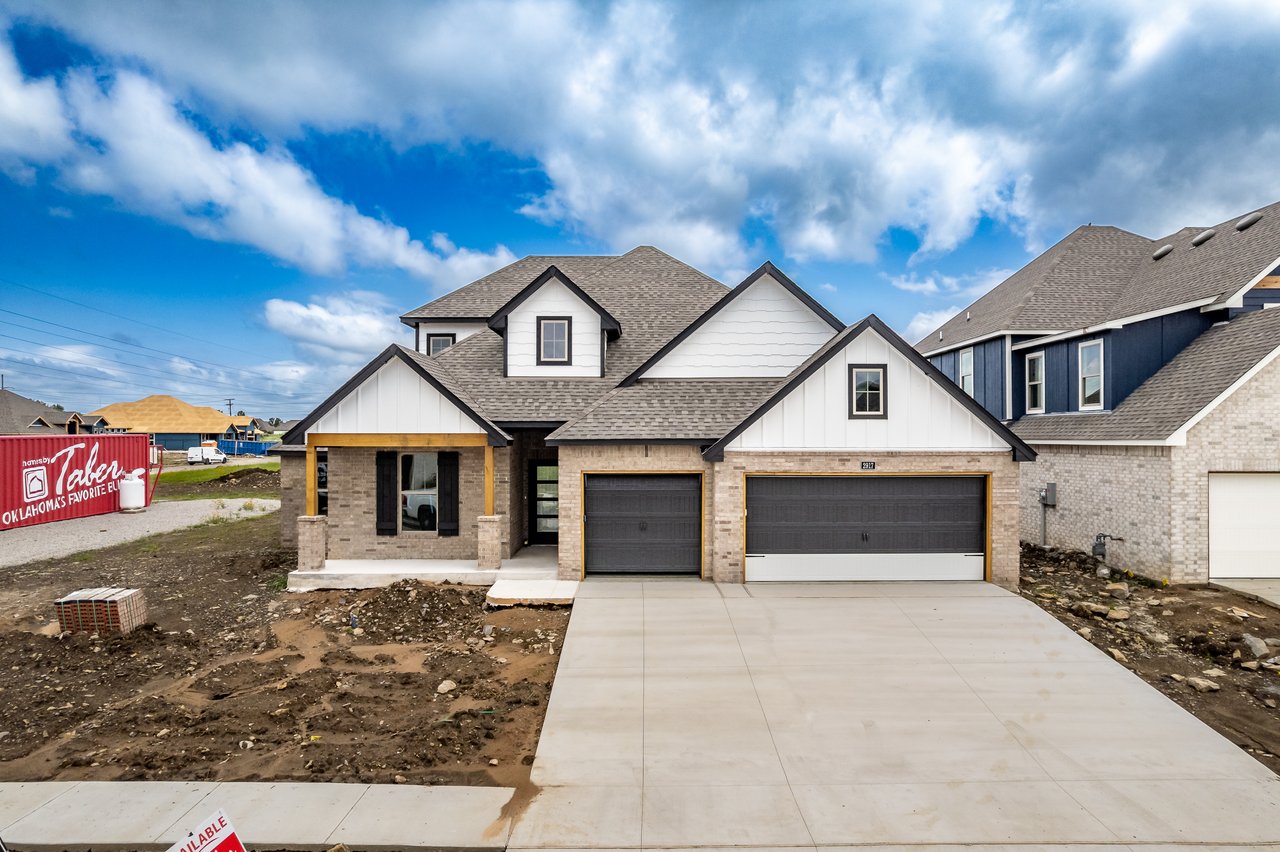
There's something undeniably appealing about a brand-new home. Nobody has lived there before. Everything is clean, fresh, and under warranty. You picked the finishes. You didn't inherit someone else's taste in flooring or cabinet hardware.
New construction in Tulsa has grown significantly over the past decade — particularly in the suburban markets of Broken Arrow, Owasso, Bixby, and Jenks, where builders have been active meeting demand from families relocating to the metro and move-up buyers seeking modern floor plans.
But buying new construction is a fundamentally different process than buying a resale home — and buyers who go in without understanding those differences often discover surprises they weren't prepared for. Some are pleasant. Others are expensive.
This guide gives you the full picture of new construction in Tulsa in 2026 — the genuine advantages, the real risks, and exactly what to watch for before you sign a builder contract.
The State of New Construction in Tulsa in 2026
Tulsa's new construction market is active, particularly in the suburban ring surrounding the city core. Builders ranging from national production builders to regional and local custom builders are working across multiple communities and price points.
Where the most new construction activity is concentrated:
- Broken Arrow — The largest suburban new construction market in the metro, with active developments across multiple price ranges
- Owasso — Significant growth on the north side, with numerous active subdivisions
- Bixby — Upscale new construction driven by the premium school district and Arkansas River proximity
- Jenks — Active but land-constrained; new development competes with premium resale
- Sand Springs and Sapulpa — More affordable new construction options west of the city
- Glenpool — Growing community south of Tulsa with active builder presence
Price ranges for new construction in the Tulsa metro start around $200,000 for entry-level production homes in outer suburban areas and extend well above $600,000 for custom and semi-custom builds in premium locations.
The Genuine Advantages of Buying New Construction
Everything Is New — And Covered by Warranty
The most obvious advantage of new construction is that the home's systems, structure, and finishes are brand new. You're not inheriting an aging HVAC system, a roof with five years left, or plumbing that's approaching the end of its useful life.
Most new construction homes in Oklahoma come with:
- 1-year warranty on workmanship — covering defects in materials and construction quality
- 2-year warranty on mechanical systems — HVAC, plumbing, electrical
- 10-year structural warranty — covering major structural defects in the foundation, framing, and load-bearing components
These warranties represent real financial protection — and a meaningful peace of mind advantage over purchasing a home where systems could fail at any time.
Modern Floor Plans and Features
Resale homes were built for the way people lived decades ago. New construction is designed around how buyers live today — open-concept layouts, large kitchen islands, primary suite retreats, dedicated home offices, and generous storage throughout.
For buyers who find resale home layouts frustrating — formal dining rooms nobody uses, closed-off kitchens, awkward traffic flow — new construction solves those problems at the design stage.
Energy Efficiency
Homes built to current building codes are significantly more energy-efficient than older construction. Better insulation, more efficient HVAC systems, low-E windows, and tighter building envelopes translate to meaningfully lower utility costs compared to older homes — a real advantage in Oklahoma, where summer cooling loads are substantial.
Many builders also offer upgraded energy packages — spray foam insulation, higher-efficiency HVAC, tankless water heaters, and smart home technology — that further reduce operating costs.
Customization
Depending on where you are in the construction timeline, buyers often have the opportunity to choose finishes that reflect their preferences — flooring, cabinets, countertops, fixtures, exterior color, and more. Buying early in a spec home's construction or purchasing a to-be-built home maximizes these options.
The ability to personalize your home without paying for a renovation after move-in is a genuine advantage that many buyers undervalue until they're living in a resale home wishing the previous owners had chosen differently.
No Competing Offers on Day One
In a competitive resale market, buyers frequently find themselves in multiple-offer situations on desirable homes. New construction eliminates that dynamic — you're not competing with other buyers for a specific home. You negotiate directly with the builder.
The Real Risks of New Construction — What Buyers Don't Always Hear
Builder Contracts Are Written to Protect the Builder
This is the single most important thing to understand before signing a new construction contract: the builder's purchase agreement is drafted by the builder's lawyers to protect the builder — not you.
Builder contracts typically include provisions that:
- Allow the builder to extend the completion timeline with limited recourse for the buyer
- Specify that changes to materials or features can be made if specified items become unavailable
- Limit the builder's liability for delays caused by supply chain issues, weather, or labor shortages
- Restrict your ability to walk away without losing your deposit
Before signing any builder contract, have a real estate attorney review it. This is not optional — it's essential. A few hundred dollars in legal review can save you thousands in disputes and surprises.
Upgrades Cost More Than You Expect
The base price of a new construction home is rarely what you'll actually pay. Builders make significant margin on upgrades — the finishes, fixtures, and features available in their design center that elevate the home beyond the base specification.
Buyers who fall in love with the model home — which is always showcased with every upgrade imaginable — are often shocked when they price out what it costs to get close to that look. Upgraded flooring, cabinet hardware, countertop material, lighting packages, and exterior options can add $30,000–$80,000 or more to the base price.
Strategy: Decide your priorities before you visit the design center. Choose the upgrades that matter most to you and that have the best resale value — typically kitchen and bathroom finishes — and accept builder-grade on items you can upgrade yourself later at lower cost.
Quality Varies Significantly Between Builders
Not all builders are equal. The Tulsa market has excellent builders, average builders, and builders whose quality control leaves real problems for homeowners after warranty periods expire.
Production builders — who build dozens or hundreds of homes simultaneously — are moving fast. Supervision varies. Subcontractors vary. The quality of a specific home can differ meaningfully from the next home the same builder produces, depending on which crews were on site and how closely inspected the work was.
How to evaluate a builder:
- Talk to owners of that builder's homes in completed subdivisions — knock on doors, be direct
- Check reviews on Google and the Better Business Bureau
- Research any complaints filed with the Oklahoma Construction Industries Board (OCIB)
- Ask your agent — experienced Tulsa agents know which builders have strong reputations and which have recurring issues
The Neighborhood Isn't Finished Yet
When you buy in a new subdivision, you're buying into a community that often doesn't exist yet in its final form. Construction noise and dust are ongoing. Empty lots sit undeveloped for months or years. The subdivision entrance, amenities, and landscaping shown in the marketing materials may be years away from completion.
You're also taking on the risk of what eventually gets built around you. If a commercial development, apartment complex, or less desirable land use ends up adjacent to the subdivision, it can affect your home's value and quality of life in ways that weren't apparent when you bought.
Research what's planned for surrounding land before committing — your agent can help pull zoning and development information for the area.
New Homes Still Need an Independent Inspection
One of the most common mistakes new construction buyers make is assuming that because the home is new, it doesn't need an inspection. This assumption is wrong and sometimes costly.
New construction homes have defects. Sometimes significant ones. Construction errors — improper framing, inadequate insulation, plumbing mistakes, electrical issues — can exist regardless of how new the home is. Builder inspections and city permit inspections are not substitutes for an independent inspection conducted on your behalf.
Hire an independent home inspector at two stages:
- Pre-drywall inspection — After framing, plumbing, electrical, and insulation are in place but before drywall is hung. This is your only chance to see inside the walls.
- Final walkthrough inspection — Before closing, to document any defects that need addressing before you take ownership.
Both are worth the cost. A pre-drywall inspection in particular can catch issues that would otherwise be hidden forever — and that the builder is obligated to address if caught before close-in.
Completion Delays Are Common
New construction timelines slip. Supply chain disruptions, labor shortages, weather delays, and permitting issues are all real variables that can push your closing date back by weeks or months.
If you're managing a lease with a hard end date, selling your current home with a specific closing date, or otherwise locked into a timeline, new construction's unpredictability is a genuine risk. Build contingency time into your planning — and get any committed completion dates in writing with clear recourse provisions before signing.
Lender Restrictions and Rate Lock Challenges
Financing a new construction home involves additional complexity compared to a resale purchase. If the home isn't finished yet, your rate lock from today may expire before closing. Many lenders offer extended rate locks for new construction — but they typically come at a cost.
Additionally, your lender may need to approve the builder and the subdivision, which adds a step to the process. Work with a lender who has experience with new construction transactions in Oklahoma and understands the specific documentation and timeline requirements involved.
Builder Incentives: What They Mean and How to Evaluate Them
Builders routinely offer incentives to attract buyers — particularly as market conditions have normalized from the seller's market peak. Common incentives include:
- Closing cost contributions — The builder covers some or all of your closing costs
- Rate buy-downs — The builder pays to temporarily or permanently reduce your interest rate through their preferred lender
- Upgrade packages — Additional finishes or features included at no extra cost
- Appliance packages — Refrigerator, washer, dryer, or other appliances included
- Lot premium waivers — Reduction or elimination of premiums on desirable lots
Builder incentives are real and can represent significant value. But they often come with conditions worth scrutinizing:
Using the builder's preferred lender. Builders frequently tie their best incentives to using their affiliated or preferred lender. This isn't always a bad deal — but compare the preferred lender's rate and terms to what you could get on the open market. If the lender's rate is meaningfully higher, the incentive may not be the deal it appears to be.
Incentives instead of price reductions. In a slowing market, builders often prefer to offer incentives rather than reduce their base price — because base price reductions affect the value of all homes in the subdivision, while incentives can be offered selectively. For buyers, a price reduction is often more valuable than an equivalent incentive because it reduces the loan amount and long-term interest costs.
Do You Need a Real Estate Agent for New Construction?
Yes — and a common misconception is that you don't. Many buyers walk into a builder's sales office unrepresented, not realizing that the sales agent in that office works for the builder — not for them.
Having your own buyer's agent in a new construction transaction costs you nothing as a buyer. Builder contracts typically include a commission for buyer's agents, and builders factor this into their pricing regardless of whether a buyer is represented.
What your agent brings to a new construction purchase:
- Independent knowledge of which builders have strong quality and service reputations
- Experience reviewing and negotiating builder contracts
- Advocacy during the construction process and at closing
- Objective guidance on upgrade choices and their resale value
- Someone in your corner whose loyalty is to you — not the builder
Register your agent on your first visit to the builder's sales office. Builders typically require that an agent be registered on the first visit to receive a commission — if you visit without an agent and return later with one, the builder may not honor the representation.
New Construction vs. Resale: A Quick Comparison
Factor | New Construction | Resale |
Condition | Brand new | Varies |
Warranty | Yes — 1/2/10 year | No |
Customization | Yes (early purchase) | No |
Timeline certainty | Lower | Higher |
Price negotiability | Limited | More flexible |
Neighborhood maturity | Developing | Established |
Energy efficiency | High | Varies |
Inspection complexity | Two-stage recommended | Standard |
Contract terms | Builder-favorable | More balanced |
Location options | Suburban/outer ring | Throughout metro |
Frequently Asked Questions
Q: Can I negotiate the price on a new construction home in Tulsa?
Builder base prices are less flexible than resale prices — builders protect their pricing to maintain subdivision values. However, incentives, lot premiums, and upgrade packages are often more negotiable than the base price itself. In a slower market, builders have more room to move on total value even when holding the base price firm.
Q: How long does it take to build a new home in Tulsa?
A standard production home in Tulsa typically takes 5 to 9 months from contract to completion. Custom and semi-custom homes take longer — often 10 to 18 months depending on complexity. These timelines can extend due to weather, supply delays, or permitting issues.
Q: Should I get a home inspection on a new construction home?
Absolutely yes. A pre-drywall inspection and a final pre-closing inspection are both recommended. New homes have construction defects, and an independent inspection is your best protection against inheriting problems the builder is responsible for correcting.
Q: What is a punch list in new construction?
A punch list is a documented list of items that need to be repaired, completed, or corrected before or shortly after closing. You'll create this list during your final walkthrough with the builder. Get everything in writing — verbal commitments from builder sales staff are not enforceable.
Q: Are new construction homes in Tulsa a good investment?
New construction in established, high-demand communities — Broken Arrow, Jenks, Bixby — has historically appreciated well. New construction in outer suburban areas with abundant undeveloped land carries more appreciation uncertainty because buyers always have the option of buying brand-new rather than your used home. Location matters even more with new construction than with resale.
Conclusion
New construction in Tulsa offers genuine advantages — modern design, energy efficiency, warranty protection, and the appeal of a home that's entirely your own from day one. For buyers who go in informed, prepared, and properly represented, it's a great option in the right circumstances.
The buyers who get into trouble are the ones who sign builder contracts without legal review, skip independent inspections, get seduced by the model home's upgrade package without understanding the cost, or don't account for timeline uncertainty in their planning.
Go in with your eyes open, your agent beside you, and your inspector scheduled — and new construction can be one of the best housing decisions you make in Tulsa.
Thinking About New Construction in Tulsa?
The agents at MORE Agency work with new construction buyers throughout the Tulsa metro — and we know the builders, the subdivisions, and the contracts. We'll make sure you're represented from the first conversation to the final walkthrough.
Contact MORE Agency today before you walk into a builder's sales office. Representation costs you nothing and protects you from day one.