If you're relocating to Oklahoma — or simply considering a move within the state — the Tulsa vs. Oklahoma City question comes up almost immediately. They're the two largest cities in the state, roughly 100 miles apart on the Turner Turnpike, and they have a friendly but genuine rivalry that Oklahomans take seriously.
The honest answer is that neither city is objectively better. They're genuinely different in ways that matter — different personalities, different economies, different neighborhoods, different strengths. The right city depends entirely on what you're looking for.
This guide gives you a clear, honest comparison across the categories that matter most to people choosing where to live and buy a home.
The Basics: Size and Population
Oklahoma City is the larger of the two cities — significantly so. The OKC metro population sits at approximately 1.4 million residents, making it one of the larger mid-size metros in the south-central United States. The city proper covers an enormous geographic footprint — one of the largest by land area of any city in the country.
Tulsa's metro population is approximately 1.1 million — still a substantial mid-size city, but noticeably smaller than OKC. The Tulsa metro is more compact geographically, which affects everything from commute times to how the city feels to navigate on a daily basis.
For some people, Tulsa's slightly smaller scale feels like an advantage — easier to get around, more intimate, more connected. For others, OKC's larger size means more job opportunities, more amenities, and more of a big-city energy.
Economy and Job Market
Oklahoma City
OKC's economy is anchored by several major sectors:
Government and military — Oklahoma City is the state capital and home to Tinker Air Force Base, one of the largest Air Logistics Centers in the country and one of the metro's biggest employers. Federal and state government employment is a significant and stable component of the OKC economy.
Energy — The oil and gas industry has deep roots in OKC, with Devon Energy headquartered downtown and numerous energy-related companies throughout the metro.
Healthcare — A growing and diversifying sector, anchored by the University of Oklahoma Health Sciences Center — one of the largest medical research and education campuses in the country.
Aerospace and defense — Tinker AFB drives significant aerospace employment and contractor activity throughout the metro.
Finance and insurance — Several large financial institutions and insurance companies have significant operations in OKC.
Tulsa
Tulsa's economy has diversified significantly over the past decade:
Energy — Tulsa remains a major energy hub, historically the home of numerous oil and gas companies and the "Oil Capital of the World" designation that still resonates.
Aerospace — Tulsa's aerospace sector is one of its strongest — American Airlines' maintenance hub at Tulsa International Airport is one of the largest aircraft maintenance facilities in the world and one of Oklahoma's largest private employers.
Healthcare — A substantial and growing employer, with multiple major health systems operating throughout the metro.
Technology — Tulsa has made deliberate efforts to grow its tech sector, partly through programs like Tulsa Remote that attracted remote workers and tech professionals.
Manufacturing and logistics — Tulsa's central location and infrastructure make it attractive for manufacturing and distribution operations.
The Verdict on Jobs
OKC has a larger overall job market by virtue of its size and state capital status. For government workers, military personnel, and those in OU Health-related fields, OKC has a clear advantage.
Tulsa competes effectively in aerospace, energy, and increasingly technology. For remote workers — which represents a growing segment of both metros — the job market question is less relevant than it once was.
Cost of Living and Home Prices
Both cities are affordable by national standards — but there are meaningful differences between them.
Oklahoma City
OKC's cost of living is slightly lower than Tulsa's across most categories. Home prices in the OKC metro are modestly lower than Tulsa in comparable neighborhoods and property types — though the gap is not dramatic.
The OKC metro's larger geographic footprint means more land available for development, which has historically kept housing prices more suppressed than in markets with geographic constraints.
Tulsa
Tulsa's cost of living is slightly higher than OKC's — but both remain well below the national average. Tulsa's more compact geography and higher concentration of desirable urban neighborhoods means certain areas — Midtown, Jenks, Bixby — carry premium prices relative to comparable OKC neighborhoods.
For buyers relocating from high-cost metros, both cities feel dramatically affordable. The difference between the two is relatively minor in the context of what both offer compared to national averages.
The Verdict on Affordability
OKC has a modest cost of living edge. But both cities are genuinely affordable — and the difference between them is far less significant than the difference between either city and most coastal or Sun Belt metros.
Neighborhoods and Urban Feel
This is where the two cities diverge most distinctly — and where personal preference matters most.
Oklahoma City
OKC has invested heavily in its urban core over the past two decades. The MAPS (Metropolitan Area Projects) initiative — a series of voter-approved sales tax programs — funded significant downtown revitalization including Scissortail Park, the Paycom Center arena, the Oklahoma City National Memorial, streetcar infrastructure, and extensive trail development.
The result is a downtown that has genuinely transformed — more walkable, more vibrant, and more livable than it was 20 years ago. Neighborhoods like Midtown OKC, the Paseo Arts District, Film Row, and the Automobile Alley district have developed strong neighborhood identities with local dining, arts, and retail.
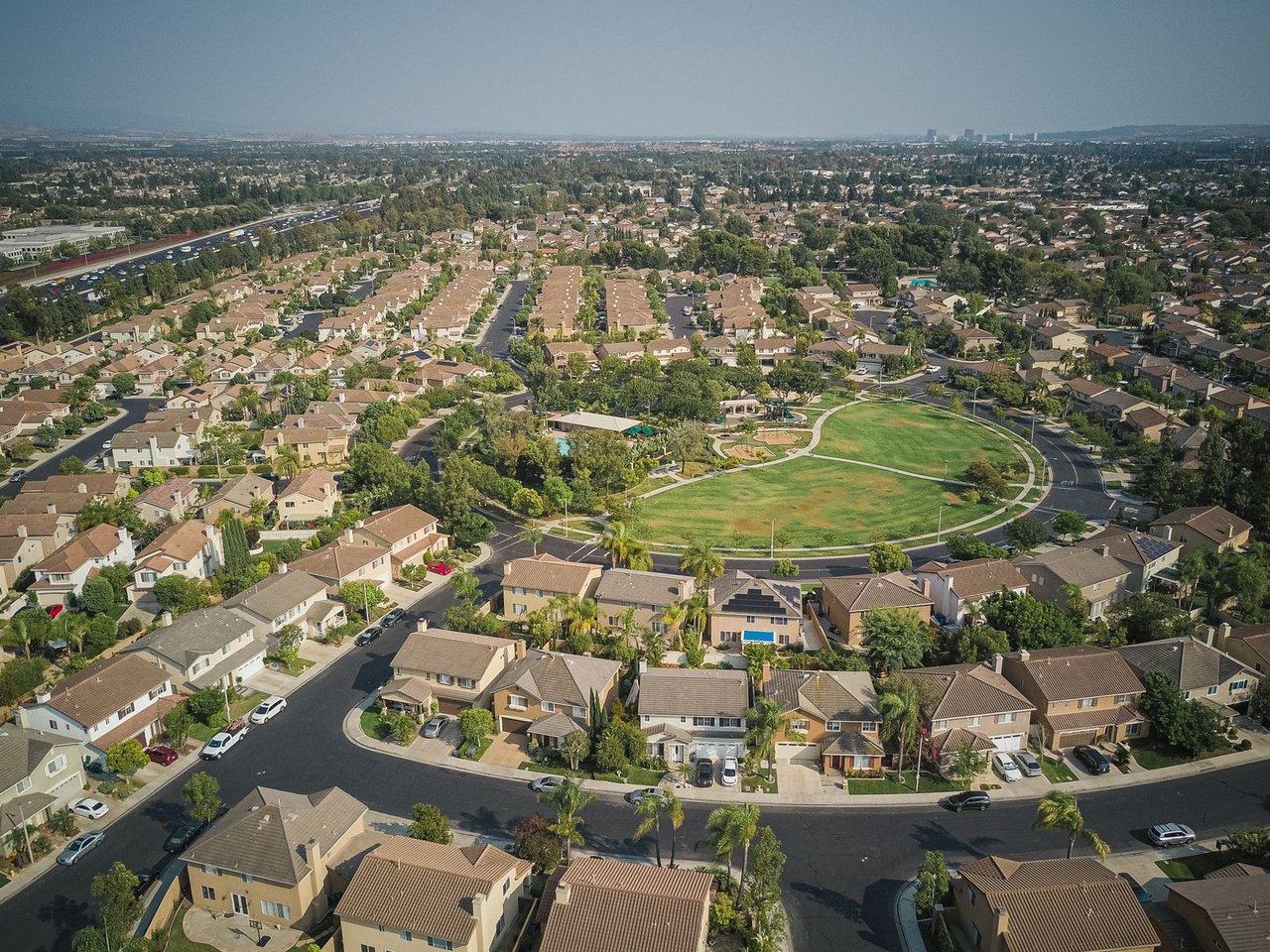
OKC's suburban sprawl is its defining geographic characteristic. The city proper covers enormous territory and most residents live in car-dependent suburban environments. The suburban communities of Edmond, Norman, Moore, Yukon, and Mustang each have their own identities and strong family-oriented infrastructure.
Tulsa
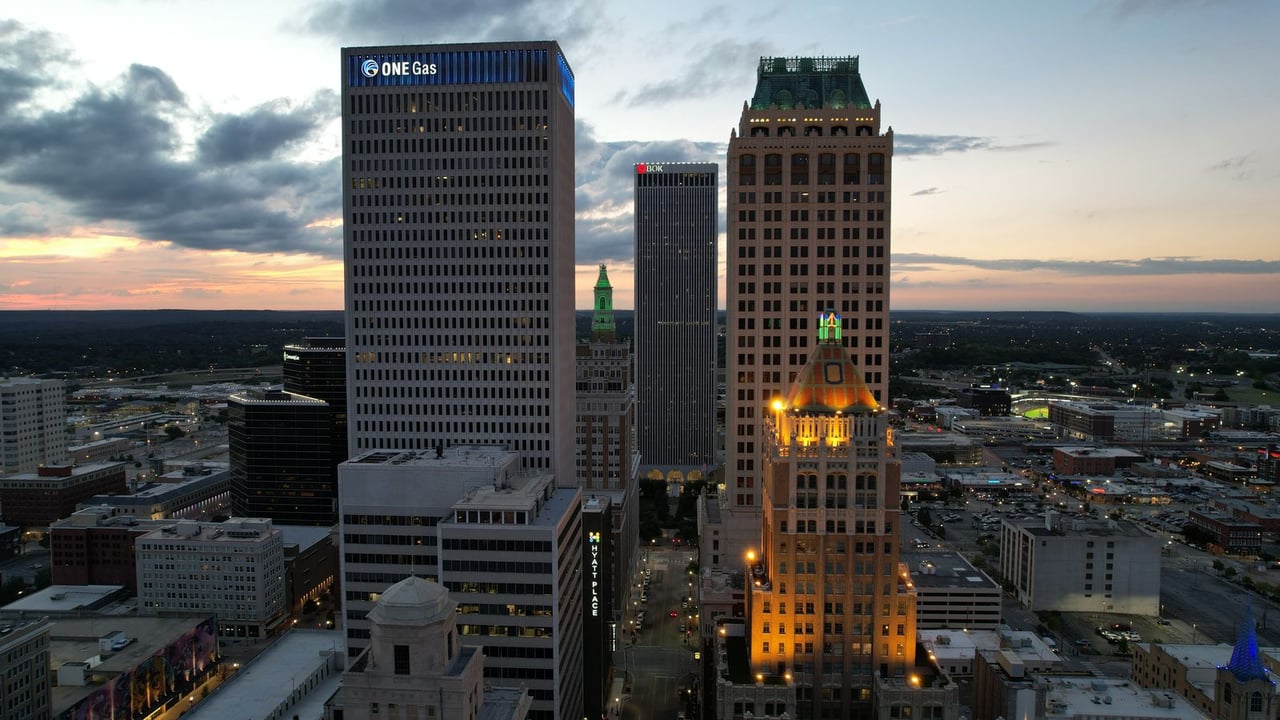
Tulsa's neighborhood character is one of its strongest assets — and a frequent point of local pride. The city has a rich architectural heritage from its oil boom era, with a concentration of Art Deco buildings downtown that is genuinely notable by national standards.
Midtown Tulsa — with its tree-lined streets, character homes, and walkable access to Cherry Street and Brookside — has a neighborhood feel that many residents from larger cities find surprisingly appealing. The Pearl District, Brady Arts District, and Blue Dome District have developed into genuine urban destinations with local restaurants, bars, and arts venues.
The Gathering Place — Tulsa's 100-acre riverside park that opened to national acclaim — is arguably the single best public amenity of either city. It has consistently received national recognition as one of the finest urban parks in the country.
Tulsa's suburban ring — Broken Arrow, Jenks, Bixby, Owasso — offers strong family-oriented communities with excellent schools and modern amenities.
The Verdict on Neighborhoods
Tulsa wins on neighborhood character, walkability, and the quality of its urban experience relative to its size. OKC wins on the scale of its downtown revitalization investment and the variety of its suburban options. Buyers who prioritize urban neighborhood feel tend to favor Tulsa; buyers who prioritize suburban breadth have more options in OKC.
Arts, Culture, and Entertainment
Oklahoma City
OKC's arts and cultural scene has grown significantly with downtown investment:
- Oklahoma City Museum of Art — A solid regional art museum with a notable Chihuly glass collection
- National Cowboy & Western Heritage Museum — A nationally recognized institution with an outstanding collection
- Oklahoma City Philharmonic — A professional orchestra performing at the Civic Center
- Paycom Center — A major arena hosting NBA games (Oklahoma City Thunder), concerts, and major events
- The OKC Thunder — Oklahoma's NBA franchise and a source of enormous civic pride
OKC's entertainment scene benefits from its larger size — more national touring acts, more major sporting events, more large-venue options.
Tulsa
Tulsa's cultural offerings punch well above its weight:
- Philbrook Museum of Art — A genuine world-class institution in a stunning former estate setting; consistently one of the best regional art museums in the country
- Gilcrease Museum — Houses one of the world's most significant collections of American Western art and Native American artifacts; currently undergoing a major expansion
- Tulsa Performing Arts Center — Home to the Tulsa Symphony, Tulsa Opera, and Ballet Tulsa
- BOK Center — A well-regarded arena for concerts and events
- Tulsa's music heritage — Deep roots in American music history including the Tulsa Sound, connections to Bob Dylan, Leon Russell, and a rich blues tradition
Tulsa's food and bar scene — particularly along Cherry Street, Brookside, and in the Brady Arts District — is sophisticated and locally driven in a way that surprises visitors expecting less from a mid-size Oklahoma city.
The Verdict on Arts and Culture
Tulsa wins on museums and cultural depth relative to size. OKC wins on major sports (Thunder), larger venues, and the sheer scale of entertainment options its larger population supports. Both cities have genuinely more to offer than most people outside Oklahoma expect.
Schools
Oklahoma City
OKC's public school landscape is complex. Oklahoma City Public Schools has faced challenges and the quality of specific schools varies widely. Many OKC families choose suburban districts — Edmond Public Schools, Deer Creek, Yukon, and Norman are among the most respected in the metro.
Tulsa
Tulsa Public Schools similarly varies by school and zone, with some strong options and some that lag. The suburban districts surrounding Tulsa — Broken Arrow, Jenks, Bixby, Owasso, and Union — are consistently among the highest-performing in Oklahoma and are a primary driver of residential demand in those communities.
The Verdict on Schools
Both cities have strong suburban school options and challenging urban district landscapes. The suburban school districts surrounding Tulsa — particularly Jenks and Bixby — have a slightly stronger statewide reputation on average than their OKC counterparts, though Edmond is highly regarded. Families focused on schools should research specific districts in their target communities regardless of which city they choose.
Outdoor Recreation and Green Space
Oklahoma City
OKC's outdoor story has improved dramatically with Scissortail Park — a 70-acre urban park in the heart of downtown that opened in 2019 and has become a genuine community anchor. The city also has extensive trail development along the Oklahoma River and throughout suburban greenbelts.
Lake Hefner provides sailing, fishing, and waterfront recreation within the city. The broader region offers access to Lake Eufaula and other state lakes within reasonable driving distance.
Tulsa
Tulsa's outdoor assets center on the Gathering Place — widely considered one of the finest urban parks in the country, set along the Arkansas River with world-class design and programming. The River Parks trail system provides miles of paved trails along the Arkansas River.
Tulsa's proximity to northeastern Oklahoma — the Ozark foothills, the Osage Hills, and numerous state parks — gives residents access to hiking, camping, and nature recreation within 30–60 minutes of the city in a landscape that most people don't associate with Oklahoma.
Keystone Lake and Skiatook Lake provide boating and water recreation close to the metro.
The Verdict on Outdoors
Tulsa wins on the quality of its signature outdoor asset — the Gathering Place is in a class of its own. OKC wins on the Oklahoma River development and Scissortail Park, which is also excellent. Tulsa has a slight edge on proximity to varied natural landscapes in northeastern Oklahoma.
Traffic and Commute
Oklahoma City
OKC's enormous geographic footprint means longer commutes for many residents. The city's highway system is extensive but the distances involved — sprawling suburbs far from employment centers — mean average commute times can be significant. The city has invested in a streetcar system in the downtown core, but the vast majority of OKC residents are car-dependent.
Tulsa
Tulsa's more compact geography generally produces shorter commute times than OKC. The metro's highway system is adequate for current traffic levels, and rush hour congestion — while real — is noticeably less severe than in OKC or most comparable-sized cities nationally. Tulsa is also a car-dependent city, but the distances involved are simply shorter.
The Verdict on Commute
Tulsa wins on commute — shorter distances, less congestion, and a more navigable daily driving experience for most residents.
Which City Is Right for You?
Priority | Advantage |
Larger job market | Oklahoma City |
Government/military careers | Oklahoma City |
Lower home prices | Oklahoma City (modest edge) |
Neighborhood character and walkability | Tulsa |
Arts and museum quality | Tulsa |
Best single public park | Tulsa (Gathering Place) |
Major professional sports | Oklahoma City (Thunder) |
Commute and navigability | Tulsa |
Proximity to nature | Tulsa |
University presence (OU) | Oklahoma City / Norman |
Remote worker infrastructure | Tulsa (Tulsa Remote legacy) |
Overall urban feel | Tulsa |
Frequently Asked Questions
Q: Is Tulsa or Oklahoma City more affordable?
Both are affordable by national standards. OKC has a modest cost of living edge — slightly lower home prices on average and a lower overall cost index. But the difference is relatively minor and both cities offer dramatically better affordability than most comparable American metros.
Q: Which city has better restaurants and nightlife?
Both cities have improved significantly over the past decade. Tulsa's food scene — particularly Cherry Street, Brookside, and the Brady Arts District — is generally considered more developed and locally distinctive relative to its size. OKC has more options by volume given its larger population.
Q: Is Tulsa or OKC better for families?
Both are excellent for families. Tulsa's suburban school districts — particularly Jenks and Bixby — have a slight statewide reputation edge. OKC's Edmond district is also highly regarded. Both cities offer safe suburban communities with strong family infrastructure.
Q: How far apart are Tulsa and Oklahoma City?
Approximately 100 miles via the Turner Turnpike — about a 90-minute drive under normal conditions. Many Oklahomans make the trip regularly for work, events, and family.
Q: Which city is growing faster?
Oklahoma City has historically grown faster by population due to its larger base, more available land, and state capital economic engine. Tulsa has seen accelerated growth in recent years — partly driven by Tulsa Remote and related talent attraction — and is growing at a pace above its historical average.
Conclusion
Tulsa and Oklahoma City are both genuinely good places to live — affordable, friendly, and offering more than most people outside Oklahoma expect. The choice between them comes down to what you value most.
If you're drawn to urban neighborhood character, world-class parks, a distinctive arts scene, and a slightly smaller scale that makes daily life feel more navigable — Tulsa is your city.
If you need the state capital's job market, want NBA basketball, prefer the scale of a larger metro, or are tied to OU or military connections at Tinker — Oklahoma City makes more sense.
Either way, you're choosing a city where your money goes further, your commute is manageable, and the quality of life exceeds what most people expect until they actually live there.
Thinking About Buying a Home in Tulsa?
The agents at MORE Agency know the Tulsa market inside and out — the neighborhoods, the schools, the commutes, and the communities that make this city one of the best-kept secrets in American real estate.
Contact MORE Agency today for a free consultation on buying or selling in the Tulsa metro. We'd love to show you what Tulsa has to offer.